
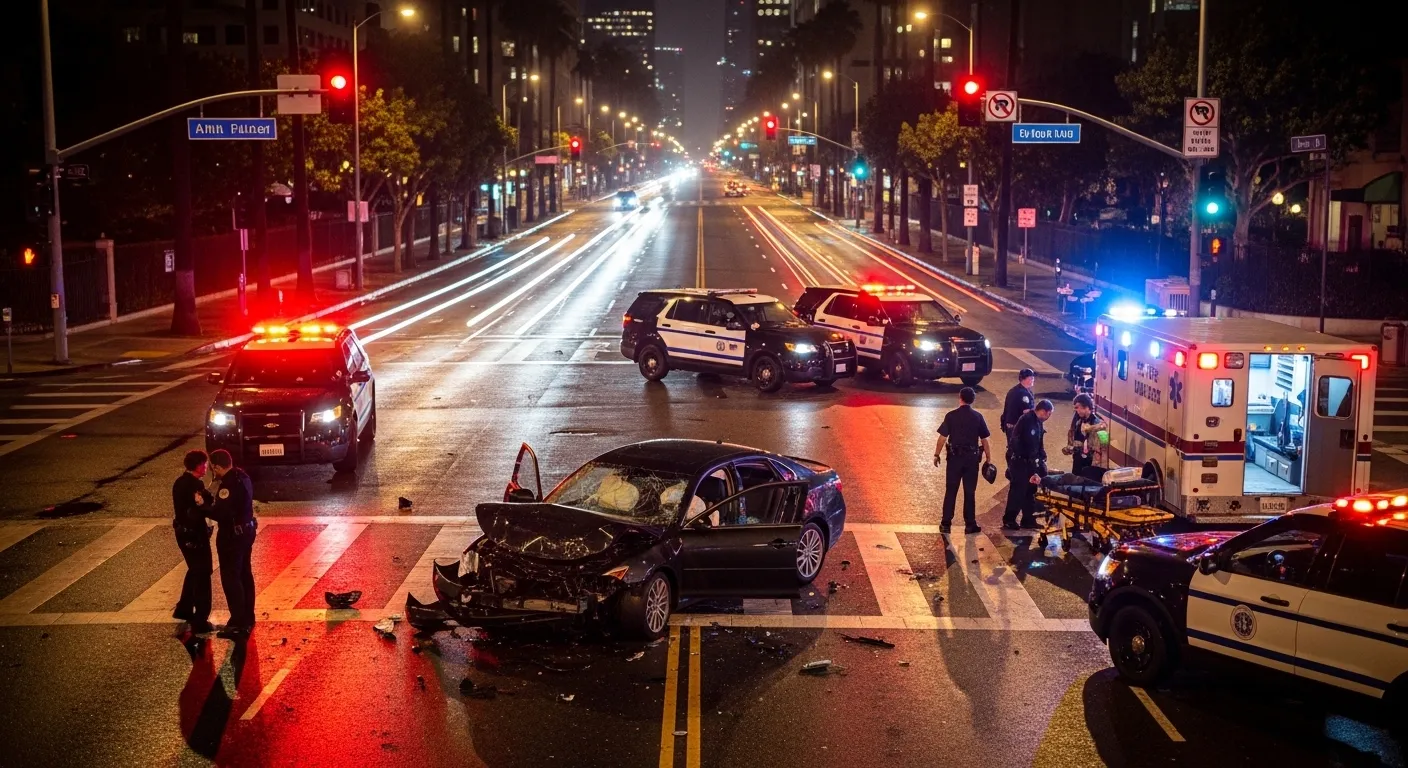
Los Angeles hit-and-run accident claims are getting more attention in 2026 because fleeing drivers remain a serious problem on busy city streets. When a driver causes a crash and leaves the scene, the injured person is often left dealing with pain, confusion, property damage, and major insurance questions without the basic information that usually starts a normal claim. In a typical collision, you exchange names, insurance details, and contact information. In a hit-and-run, that foundation may be missing from the start.
That is exactly why these cases are more difficult than many people expect. A victim may know they were hurt, but not know who hit them, what insurance is available, or what steps matter most in the first hours after the crash. That uncertainty can weaken a case fast if evidence is lost, reports are delayed, or the wrong statements are made too early.
This topic fits naturally with the content already on the site. It connects directly to Distracted Driving Accidents in Los Angeles: Legal Rights and Compensation for Victims, Pedestrian Accidents in Los Angeles: Legal Rights and Responsibilities, Understanding Comparative Negligence in California Personal Injury Cases, Navigating the Personal Injury Claim Process in Los Angeles, and The Impact of Social Media on Your Personal Injury Claim.
Why Hit-and-Run Cases Matter More in 2026
Recent traffic safety research has made it harder to treat hit-and-runs like isolated incidents. They are not rare. They are a recurring legal and public safety issue. In a city like Los Angeles, where traffic density, nightlife, delivery traffic, rideshare activity, and pedestrian movement all overlap, the odds of a victim being left with little information after a crash are real.
These cases are especially dangerous for pedestrians, cyclists, and scooter riders. When a vulnerable road user is hit and the driver flees, the victim may be too injured to identify the vehicle clearly. That makes fast documentation even more important. In many situations, the success of a claim depends less on what happened in the collision and more on what was preserved in the first day after it.
What Makes Los Angeles Hit-and-Run Accident Claims Different?
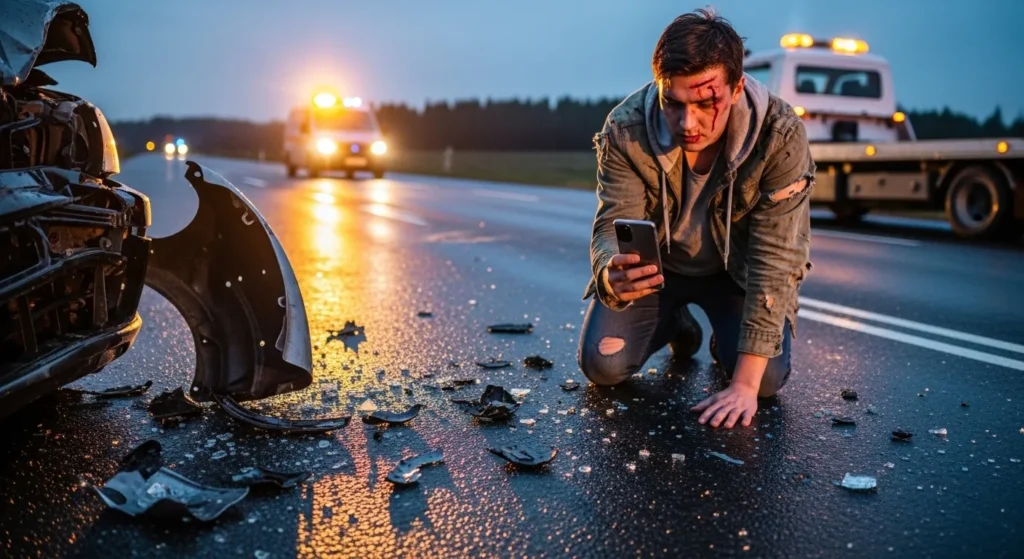
Most personal injury claims start with a known at-fault party. Los Angeles hit-and-run accident claims often begin without that advantage. Instead of dealing directly with the other driver’s insurer, a victim may need to build the case through indirect evidence and then pursue recovery through their own policy, especially through uninsured motorist coverage if it applies.
That changes the whole strategy. In a normal crash, the argument may center on fault and damages. In a hit-and-run, there is often a second battle over whether there is enough proof to trigger coverage in the first place. Insurance companies may scrutinize these cases more aggressively, asking whether physical contact occurred, whether there were witnesses, whether the injuries line up with the reported facts, and whether the claim was reported quickly enough.
The First Steps Matter More Than Most People Realize
If you are injured in a hit-and-run crash, the first priority is safety and medical care. The second priority is preserving evidence before it disappears. Even a short delay can hurt the claim because surveillance footage may be overwritten, debris can be cleared, and witnesses may leave without giving contact information.
The smartest early steps usually include:
- Call 911 or local law enforcement immediately.
- Get medical care right away, even if symptoms seem minor at first.
- Take photos of vehicle damage, debris, skid marks, injuries, and the surrounding roadway.
- Ask witnesses what they saw and get names and phone numbers.
- Check nearby homes, stores, parking lots, or intersections for surveillance cameras.
- Write down every detail you remember about the fleeing vehicle, even if incomplete.
A partial plate number, bumper damage, vehicle color, company logo, travel direction, or time stamp can matter later. In many hit-and-run cases, small details become the difference between a dead-end file and a viable claim.
Why Insurance Becomes the Real Fight
In many Los Angeles hit-and-run accident claims, the real dispute shifts to insurance coverage. If the fleeing driver cannot be identified, your own policy may become the main path to recovery. That surprises many people. They assume their insurer will simply help because they are the policyholder. It does not always work that way.
Insurers still investigate these claims closely. They may question how the crash happened, whether there was actual contact, whether the event qualifies as a hit-and-run under the policy, and whether the injuries are as serious as claimed. That is why organized documentation matters so much.
Uninsured motorist and underinsured motorist coverage can become very important here. If the at-fault driver is unknown or has too little insurance to cover a serious injury, that coverage may help protect the victim. Property damage issues can also raise separate questions, depending on what collision or related coverage is available under the policy.
California Drivers Also Need to Think About DMV Reporting
Many people think filing a police report is enough after a crash. In California, that may not be the full reporting requirement. If someone was injured or killed, or if property damage exceeds the reporting threshold, an SR-1 report may also need to be submitted to the DMV within 10 days. Missing that step can create unnecessary problems while you are already dealing with treatment and insurance paperwork.
This is one reason hit-and-run cases feel overwhelming. The other driver is gone, but the injured victim may still have immediate legal and reporting obligations. The more organized you are at the beginning, the easier it becomes to protect the claim later.
What Evidence Can Strengthen the Claim?
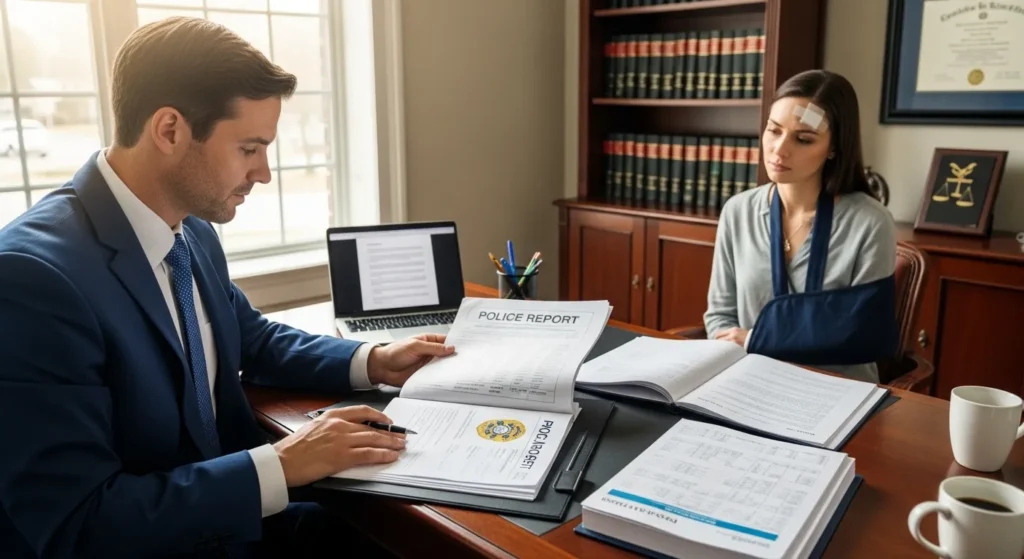
Because the driver fled, evidence is the backbone of the case. Strong Los Angeles hit-and-run accident claims usually rely on a combination of physical proof, witness support, and fast documentation.
The most useful evidence often includes:
- Photos of impact damage and debris patterns
- Paint transfer or broken parts left at the scene
- Police report details
- Medical records created soon after the crash
- Surveillance footage from nearby homes, stores, and intersections
- Witness statements describing the vehicle or driver behavior
- Repair estimates and vehicle inspection findings
- Phone photos or dashcam footage from you or nearby drivers
If the victim was a pedestrian or cyclist, scene evidence becomes even more important. Crosswalk markings, lighting, visibility, lane position, and impact location may all help prove what happened.
Can Comparative Negligence Still Affect the Case?
Yes. Even in a hit-and-run case, insurers may still try to argue that the injured person shares some blame. They may claim the victim changed lanes unsafely, crossed outside a crosswalk, rode unpredictably, or failed to react in time. That does not automatically destroy the case, but it can affect the value of the claim under California’s pure comparative negligence rules.
That is why it helps to understand the legal basics in Understanding Comparative Negligence in California Personal Injury Cases. A hit-and-run does not erase the defense’s ability to raise fault arguments, even when the fleeing driver clearly acted wrong by leaving the scene.
How Social Media Can Quietly Damage a Good Case
One of the easiest mistakes after a collision is posting too much online. Photos, captions, location tags, and casual comments can be misread by insurance adjusters. Even a harmless-looking post can be used to argue that you were not badly injured or that your version of events changed.
That is why this internal guide also matters here: The Impact of Social Media on Your Personal Injury Claim. In a disputed hit-and-run case, the less unnecessary material you give the other side, the better.
What Compensation May Be Available?
Depending on the facts, insurance coverage, and how well the claim is documented, a victim may be able to recover compensation for:
- Emergency treatment and hospital bills
- Follow-up care and rehabilitation
- Lost wages and reduced earning ability
- Vehicle repair or replacement costs
- Pain and suffering
- Emotional distress after the crash
- Other out-of-pocket losses tied to recovery
The value of the case usually depends on injury severity, evidence strength, available insurance, and whether the fleeing driver is later identified. If the driver is found later, the claim may expand beyond a first-party insurance issue into a more traditional liability case.
How This Topic Fits the Site’s Existing Content
This post strengthens the site’s existing content cluster instead of sitting alone. It pairs naturally with Distracted Driving Accidents in Los Angeles, Pedestrian Accidents in Los Angeles, Los Angeles Personal Injury Claims: Common Questions Answered, and How to Navigate a Personal Injury Claim in Los Angeles. It also gives the site a more current accident-law topic tied directly to recent traffic safety data.
Conclusion
Los Angeles hit-and-run accident claims are a strong 2026 topic because they reflect the hardest part of modern injury law: serious crashes where the person who caused the harm disappears before accountability begins. Victims should not assume they have no options just because the driver fled. The smarter move is to act fast, document aggressively, understand the insurance angle, and avoid early mistakes that weaken the case.
In a hit-and-run case, the first hours and days matter more than most people realize. That is where evidence is preserved, coverage issues are identified, and the claim either starts on solid ground or begins to fall apart.