
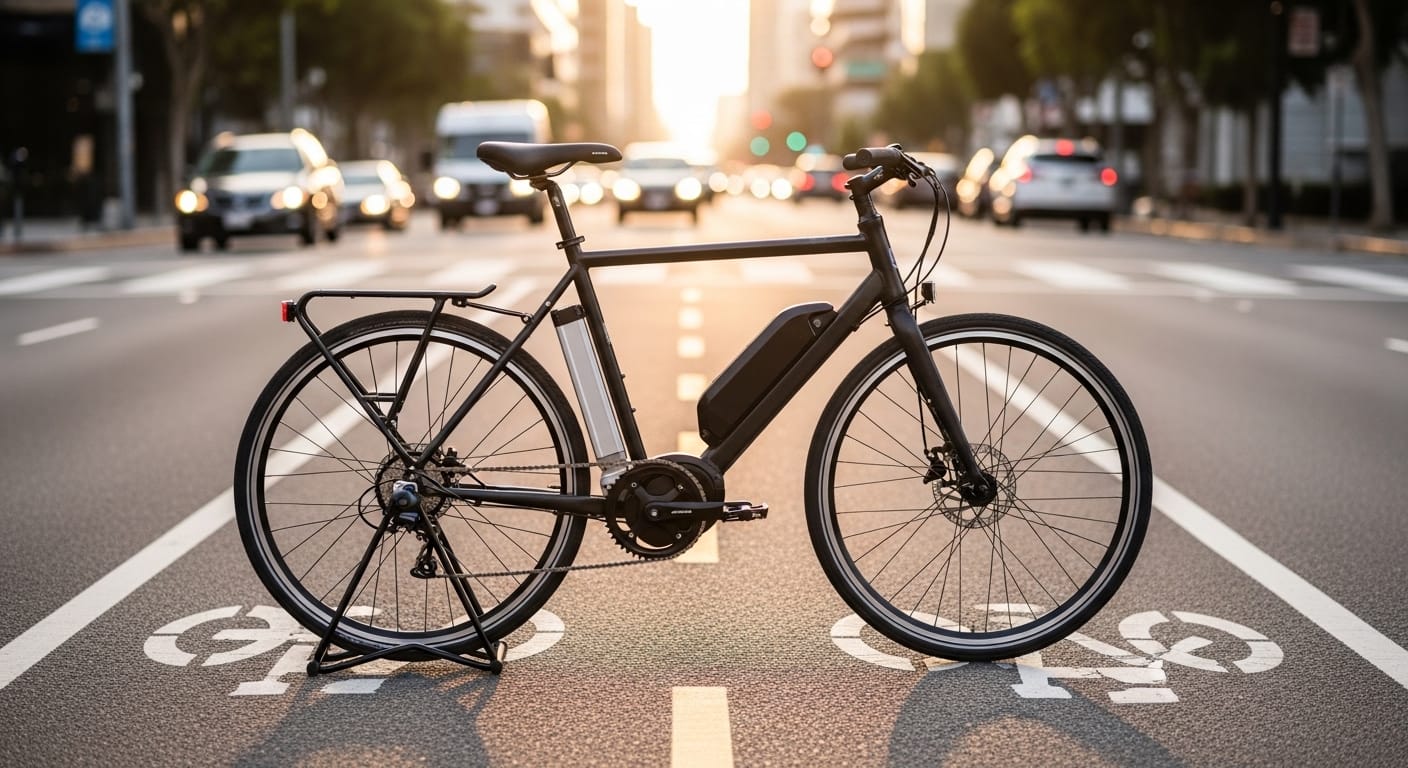
Electric bicycles are now part of daily life in Los Angeles. People use them to commute, run errands, and avoid traffic. That convenience also brings more crashes, more disputes, and more legal questions. When an e-bike rider collides with a car, pedestrian, cyclist, or road hazard, the claim often turns on more than the impact itself.
California 2026 e-bike laws now matter in a bigger way after a crash. Insurance companies and defense lawyers look closely at how the bike was equipped, how the rider used it, and whether the bike still met California’s legal definition of an e-bike. Those details can affect fault, credibility, and compensation.
Many injured riders assume the law will treat an e-bike crash like a standard bicycle case. Sometimes that is true. In many cases, it is not. The updated rules give both sides more facts to argue over. That is why riders, drivers, and pedestrians in Los Angeles need to understand how these law changes can shape a personal injury claim.
Why California 2026 e-bike laws matter more in Los Angeles
Los Angeles e-bike injury claims are getting more complex
Los Angeles creates the perfect conditions for e-bike crashes. Heavy traffic, tight turns, parked cars, delivery activity, and crowded intersections all increase the risk. Riders can get hit by turning vehicles, forced out of a lane, or knocked down by an opening car door. Pedestrians can also suffer serious injuries when an e-bike enters a sidewalk, crosswalk, or shared path too fast.
More riders on the road create more conflict points
As more people ride e-bikes across Los Angeles, the number of conflict points rises with them. Drivers do not always judge e-bike speed correctly. Pedestrians may not hear an approaching rider. Delivery riders often move through dense traffic where one sudden mistake can cause a serious collision.
This topic also fits well with your existing legal content. Readers interested in e-bike injury claims may also want to read your post about e-scooter accident liability in Los Angeles. Many of the same streets, hazards, and fault disputes appear in both types of cases.
Small rule violations can become big liability arguments
Insurance companies look for any fact that helps them lower a payout. In an e-bike case, they may argue that the rider lacked required equipment, ignored traffic rules, or used a modified bike that no longer qualified as a legal e-bike. Even when a driver made the main mistake, the defense may still try to shift part of the blame.
California follows comparative negligence rules. That means an injured person can still recover damages even if they share some fault. Still, that shared fault can reduce the final value of the claim. For that reason, the facts surrounding the bike, the rider, and the scene matter a lot from day one.
What changed under California 2026 e-bike laws
The reason this topic is trending is simple. California updated the law, and those changes now affect real-world injury claims. The new rules give insurers and lawyers more issues to examine after a crash.
The rule changes that can affect a claim
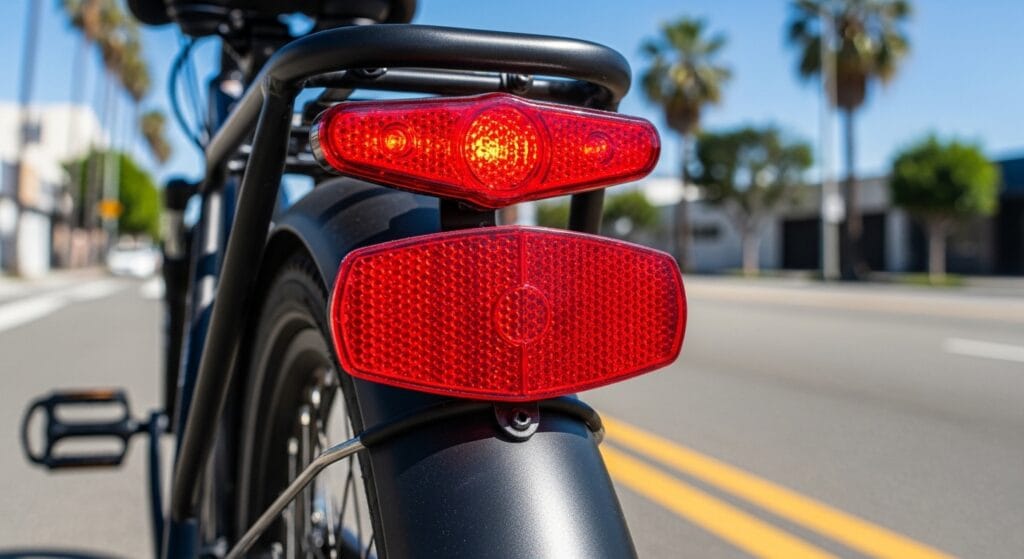
Several updates stand out. First, California now requires an e-bike to have a rear reflector or a qualifying rear light during all hours, not just at night. Second, the state strengthened its stance against tampering with e-bikes to increase their speed beyond legal limits. Third, California now bars the sale of products, devices, or applications that unlawfully change an e-bike’s speed capability.
These changes matter because they can show up in a claim file quickly. A driver’s insurer may ask whether the bike had proper safety equipment. The defense may also question whether the bike had been altered, unlocked, or reclassified in practice. In some cases, lawyers may review purchase records, photos, app settings, repair history, or product listings tied to the bike.
None of that automatically defeats an injury claim. A negligent driver does not escape liability just because a rider may have broken a rule. Still, these facts can influence how the other side argues fault and damages. That is why California 2026 e-bike laws now matter well beyond basic safety discussions.
How the new law can affect compensation after a crash
What injured riders, pedestrians, and drivers should do right away
After an e-bike crash, medical care comes first. Some injuries seem minor at the scene but get worse later. Head injuries, wrist fractures, shoulder trauma, knee damage, and back pain often take time to show their full impact. Early treatment also creates records that can support the claim later.
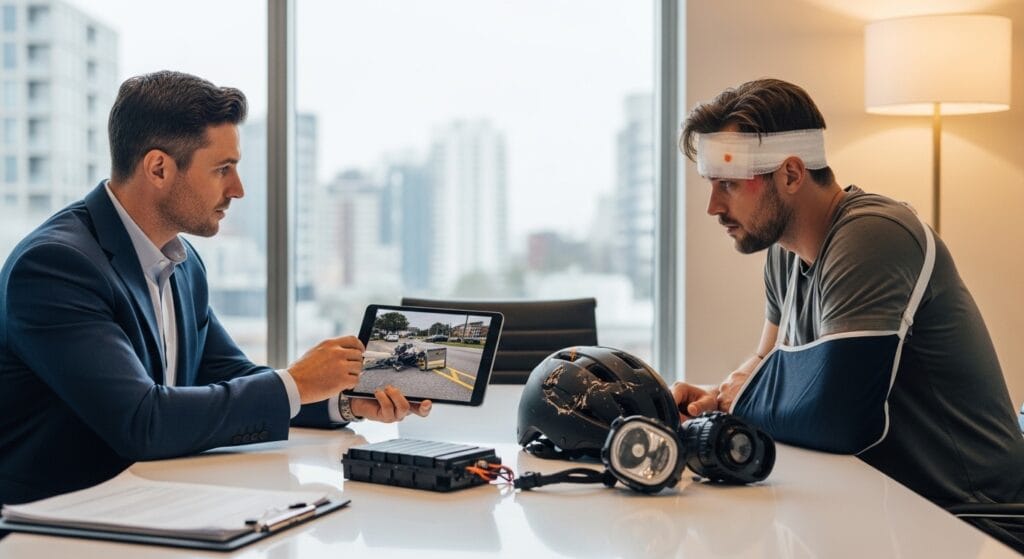
Next, protect the evidence. Take clear photos of the e-bike before anyone repairs it. Capture the rear light or reflector, visible damage, helmet damage, tires, display screen, and any aftermarket parts. Save receipts, app screenshots, serial numbers, and rental information if the bike was rented. If a car was involved, get the driver’s insurance details and the traffic report number.
Strong evidence keeps weak defense arguments from growing
Good evidence often decides whether a claim stays strong. Scene photos, surveillance footage, witness names, damaged gear, police records, and medical records can all support the injured person’s version of events. Video matters even more in Los Angeles because businesses and intersections may record the crash. That footage may disappear fast, so quick action helps.
Injured victims should also stay careful on social media. A casual post can give the defense something to twist. That same warning applies in other accident cases too, including your article on hit-and-run accident claims in Los Angeles. Fast action and clean documentation usually make a big difference.
A strong e-bike injury claim may include medical bills, lost wages, future treatment, pain and suffering, and property damage. In severe cases, the claim may also include long-term rehabilitation or reduced earning capacity. Clear records make those losses easier to prove.
Readers who want the legal source can review the official California materials, including the AB 544 bill text, the AB 545 bill text, and the California DMV bicyclist and pedestrian safety guide.
California 2026 e-bike laws now play a direct role in many Los Angeles injury claims. They affect how insurers investigate crashes, how lawyers argue fault, and how victims prove damages. Anyone involved in an e-bike collision should move fast, preserve evidence, and take the updated law seriously from the start.