
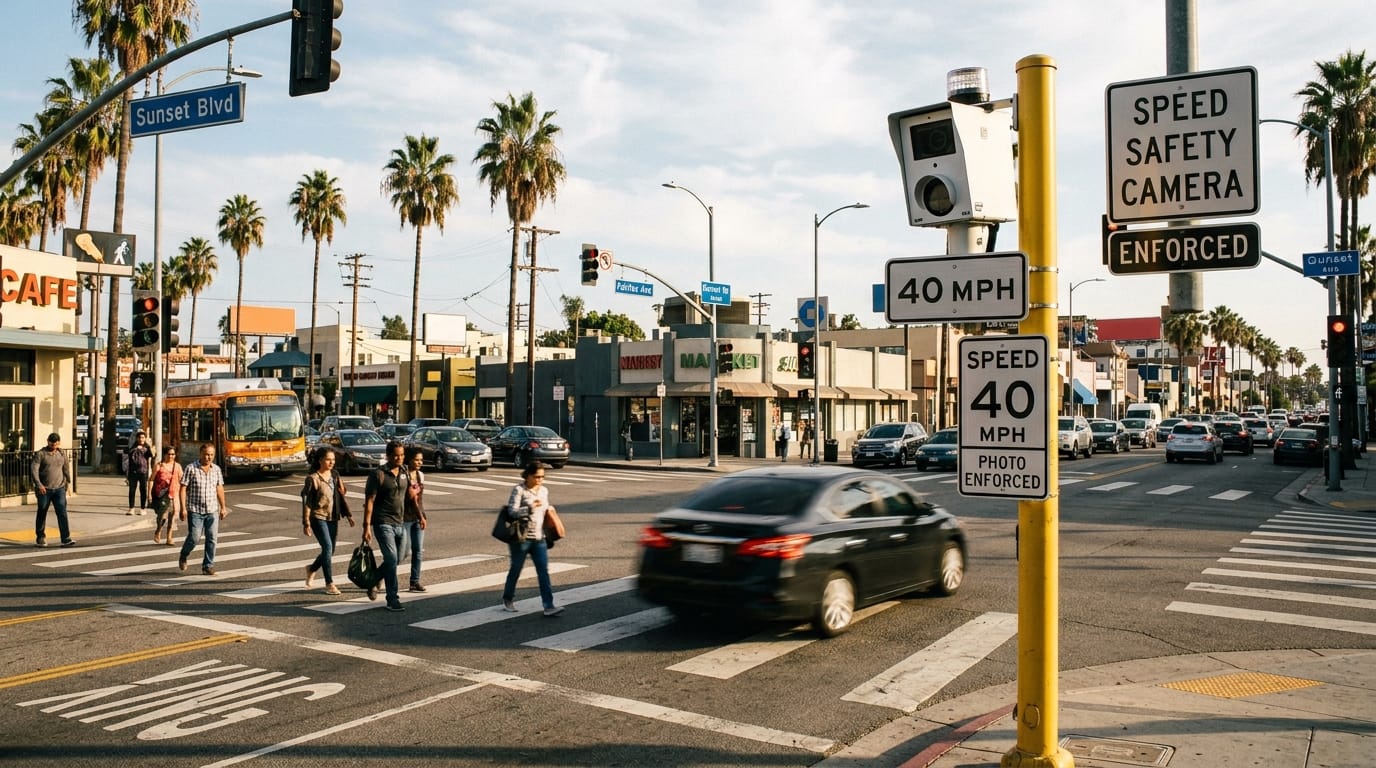
Speeding accident claims in Los Angeles are becoming a bigger legal topic in 2026 because speed is no longer just a detail in a police report. It is now connected to public safety programs, crash data, automated enforcement, street design, pedestrian risk, and personal injury compensation. When a driver is moving too fast for the road, traffic, weather, or neighborhood conditions, the impact can turn a normal collision into a life-changing injury case.
Los Angeles is moving forward with a major Speed Safety System Program designed to reduce dangerous speeding. LADOT states that the city will install 125 speed safety systems across Los Angeles, especially in places where speeding, crashes, and vulnerable road users are concentrated. The program targets vehicles traveling 11 miles per hour or more above the posted speed limit. For injured victims, this matters because speed-related evidence may become even more important after a crash.
This topic fits naturally with existing content on this site, including hit-and-run accident claims in Los Angeles, distracted driving accidents, and California 2026 e-bike laws. All of these cases share one issue: strong evidence can make the difference between a weak claim and a well-supported demand for compensation.
Why Speeding Accident Claims Are Trending in Los Angeles
Speeding has always been dangerous, but Los Angeles creates conditions where speed can become especially deadly. Wide roads, heavy traffic, high-risk corridors, school zones, nightlife areas, delivery traffic, rideshare activity, cyclists, scooters, pedestrians, and freeway-style driving on city streets all increase the chance of serious injury. A driver who is only “a little fast” may still have less time to react, need more distance to stop, and strike with greater force.
That is why speeding accident claims are not only about proving that a driver exceeded the posted limit. They are also about showing how speed changed the crash. Did the driver have enough time to stop? Did the force of impact make the injuries worse? Did speed prevent the driver from yielding to a pedestrian, cyclist, or e-bike rider? Did the driver lose control before a rear-end crash, left-turn crash, or intersection collision?
Los Angeles speed cameras may change the evidence conversation
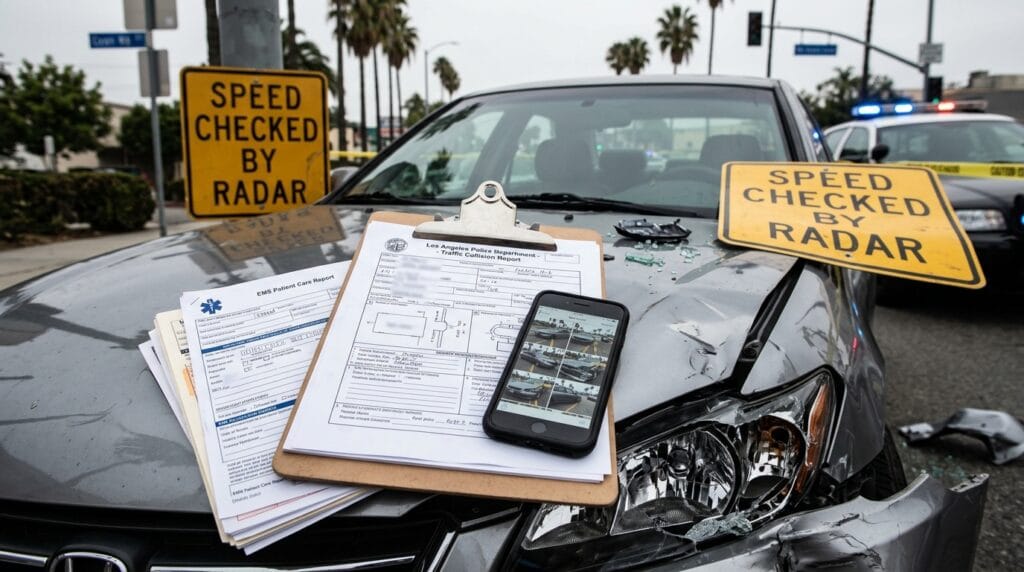
The 2026 speed safety program adds a new layer to accident investigations. Speed cameras are not a replacement for medical records, witness statements, police reports, or crash reconstruction. However, they may create more public awareness about speeding corridors and more documentation around locations where speeding is common. If a crash happens near a high-risk corridor, that location history may become part of the larger liability discussion.
Victims should understand one important point: a camera ticket and a personal injury claim are not the same thing. A speeding citation may support a negligence argument, but an injury claim still needs proof of fault, causation, injuries, damages, and insurance coverage. In other words, the victim must still connect the driver’s conduct to the actual harm suffered.
High-risk streets and vulnerable road users
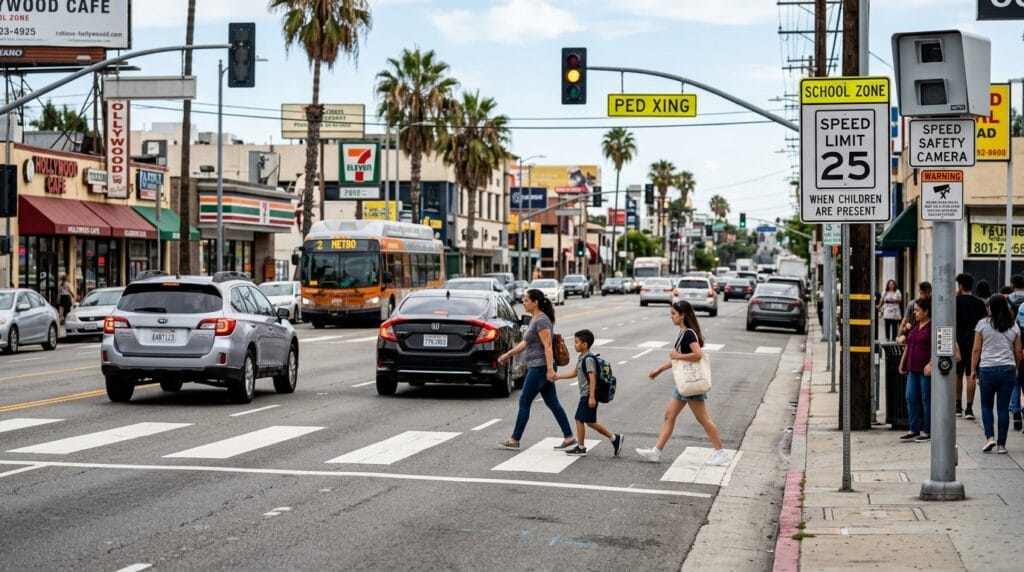
Speed is especially dangerous for pedestrians, bicyclists, scooter riders, e-bike riders, motorcyclists, seniors, and children. These road users have little protection against a vehicle impact. Even a lower-speed crash can cause fractures, head injuries, spinal trauma, torn ligaments, internal injuries, or long-term pain. When higher speed is involved, the injuries often become more severe and harder to dispute.
This is why a speeding crash involving an e-bike, scooter, or pedestrian should be documented carefully. Photos of the crosswalk, bike lane, traffic signal, vehicle damage, helmet damage, skid marks, debris field, lighting, and nearby cameras can all matter. If the crash involves an e-bike, readers may also benefit from reviewing California 2026 e-bike laws and Los Angeles injury claims.
Camera evidence does not replace injury proof
Even when speed is obvious, the insurance company may still fight the value of the claim. They may argue that the injuries were pre-existing, treatment was delayed, medical bills were too high, or the victim recovered quickly. That is why medical documentation remains critical. Emergency care, follow-up visits, imaging, therapy notes, prescriptions, work restrictions, and pain journals help prove the human cost of the crash.
For a broader step-by-step approach, victims can review how to navigate a personal injury claim in Los Angeles. A speeding case still follows the same basic injury claim structure, but the evidence may be more technical because speed, reaction time, impact force, and roadway conditions can all become disputed issues.
Common crashes where speed becomes central
Speeding appears in many different accident patterns. A rear-end crash may happen because the speeding driver could not stop in time. A left-turn collision may happen because an oncoming vehicle approached faster than expected. A pedestrian crash may happen because the driver had too little reaction time. A freeway crash may involve unsafe lane changes, following too closely, or losing control at high speed.
In Los Angeles, speed also overlaps with distracted driving and hit-and-run crashes. A driver who is texting may not notice traffic slowing ahead. A speeding driver who causes a serious crash may panic and flee. If the at-fault driver leaves the scene, the victim should report the crash immediately, seek medical care, look for witnesses, and preserve camera footage. For more guidance, see the site’s post on hit-and-run accident claims in Los Angeles in 2026.
Rear-end, intersection, and pedestrian crashes
Rear-end crashes often look simple, but speed can make them more serious. A low-speed tap is different from a high-speed impact that pushes a vehicle into another lane, causes airbag deployment, or leaves passengers with neck, back, shoulder, or head injuries. At intersections, speed can affect whether a driver could safely stop for a yellow light, yield during a turn, or avoid a pedestrian entering the crosswalk.
Pedestrian and cyclist cases are even more sensitive. The defense may argue that the victim crossed outside a marked crosswalk, entered suddenly, rode too fast, or failed to use lights. That does not automatically defeat the claim. California fault rules may allow compensation even when both sides dispute responsibility. The key is to build a clear evidence package before the insurance company controls the narrative.
How to Build a Strong Speeding Accident Claim in Los Angeles
A strong claim starts immediately after the crash. Medical care comes first. Some injuries show symptoms right away, while others appear later. Concussions, whiplash, disc injuries, nerve pain, knee injuries, and soft tissue trauma may worsen after the adrenaline fades. Delaying treatment gives insurers an easy argument: they may claim the injury was not serious or not caused by the collision.
After safety and medical needs, documentation matters. Take photos and videos from multiple angles. Capture vehicle damage, road layout, traffic signals, speed limit signs, skid marks, debris, nearby businesses, dashcams, surveillance cameras, weather, and lighting. Get witness names and contact information. If police respond, ask how to obtain the report number. If the other driver admits they were speeding, write down the exact words as soon as possible.
Evidence victims should preserve after a speeding crash
Useful evidence may include the police report, scene photos, repair estimates, medical records, ambulance records, witness statements, dashcam footage, surveillance footage, phone records, vehicle data, and insurance communications. In some cases, crash reconstruction may help explain speed, braking distance, impact angle, and force. This can be especially important when the at-fault driver denies speeding.
Victims should also be careful when speaking with insurance companies. Adjusters may ask questions that sound harmless but are designed to reduce the claim. They may ask whether you “feel better,” whether you saw the car before impact, or whether you could have avoided the crash. Before giving recorded statements or accepting quick offers, review the site’s guidance on dealing with insurance companies after an accident.
Medical records, lost income, and comparative fault
Compensation in speeding accident claims may include emergency treatment, hospital bills, physical therapy, medication, specialist care, future medical needs, lost wages, reduced earning capacity, pain and suffering, property damage, and out-of-pocket costs. The more organized the records, the easier it is to show how the crash affected daily life and financial stability.
Speeding does not automatically guarantee full compensation. The insurance company may still argue comparative fault. They may claim the victim was distracted, failed to yield, crossed unsafely, braked suddenly, or ignored road conditions. That is why victims need evidence that clearly explains what happened and why the speeding driver’s conduct caused or worsened the injuries.
For official background on the city’s program, readers can review the LADOT Speed Safety System Program. This source explains how Los Angeles plans to use speed safety systems, why locations were selected, and how the city is approaching speeding as a public safety issue.
In conclusion, speeding accident claims in Los Angeles are becoming more important in 2026 because speed is tied to enforcement, crash prevention, vulnerable road users, and evidence. A victim should not rely on one fact alone. The strongest cases combine medical records, photos, witness statements, police documentation, location evidence, insurance records, and a clear timeline of how the crash caused real harm. When speed turns a preventable collision into a serious injury, the claim must be built carefully from the beginning.
Disclaimer: This article is for general educational purposes only and does not provide legal advice. Every personal injury case depends on its own facts, evidence, insurance coverage, injuries, and applicable deadlines.