
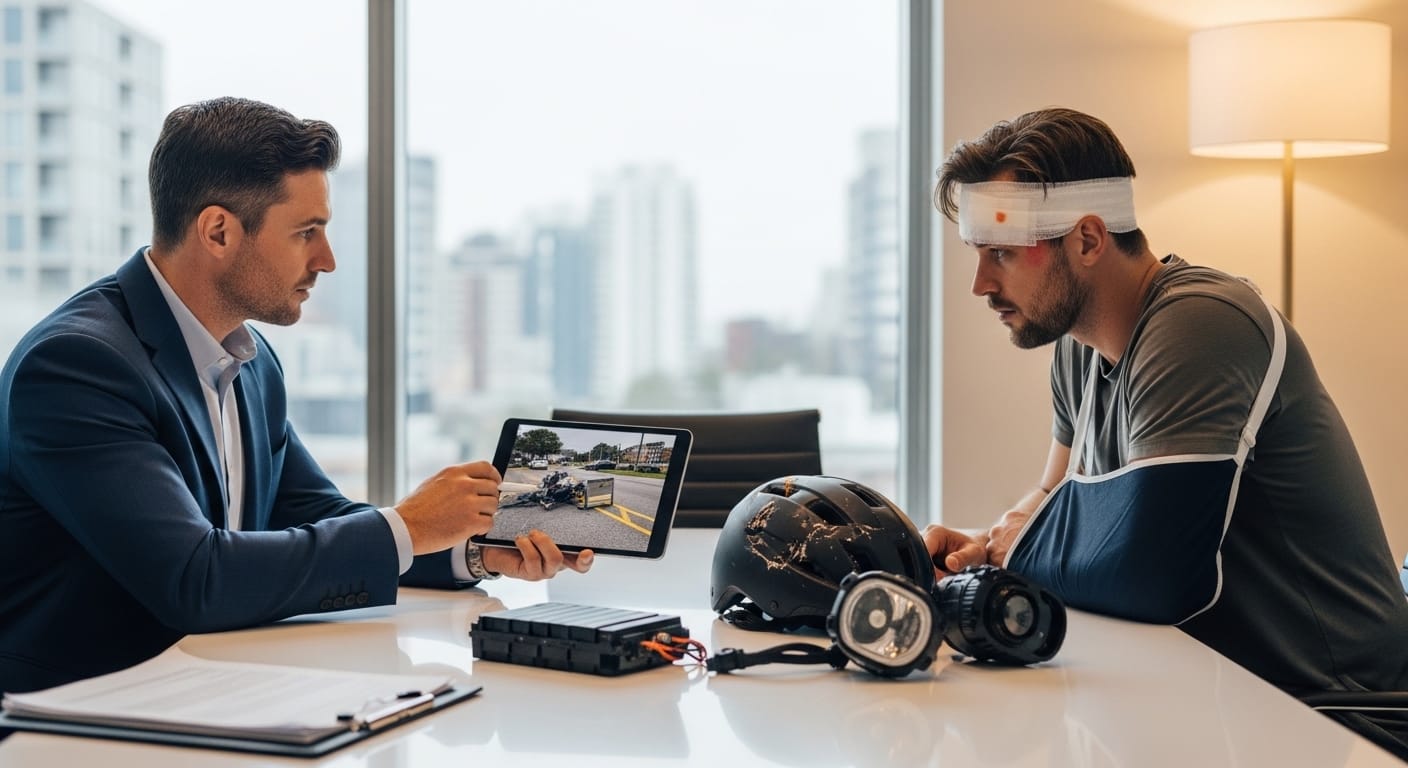
Robotaxis are no longer a future topic in Los Angeles. They are already part of the traffic mix. Riders can now book fully autonomous rides in the city, which means more people are sharing the road with vehicles that operate without a human driver behind the wheel. That change creates new convenience, but it also creates new injury risks and legal questions.
For injured riders, pedestrians, cyclists, and drivers, Los Angeles robotaxi accident claims raise issues that do not appear in a standard car crash case. A normal accident often starts with one simple question: which driver caused the collision? A robotaxi case usually starts with several questions at once. Who owned the vehicle? Who operated the system? What data was recorded? Did the vehicle misread the road, or did another road user act unpredictably?
Those questions matter because autonomous vehicle cases move fast. The company behind the vehicle may have ride records, sensor data, internal logs, and camera footage. The injured person may have only scene photos, medical records, and a short window to preserve outside evidence. If the claim is not handled carefully, important facts can disappear before the injured person understands what the case is really about.
Robotaxis are active in Los Angeles now
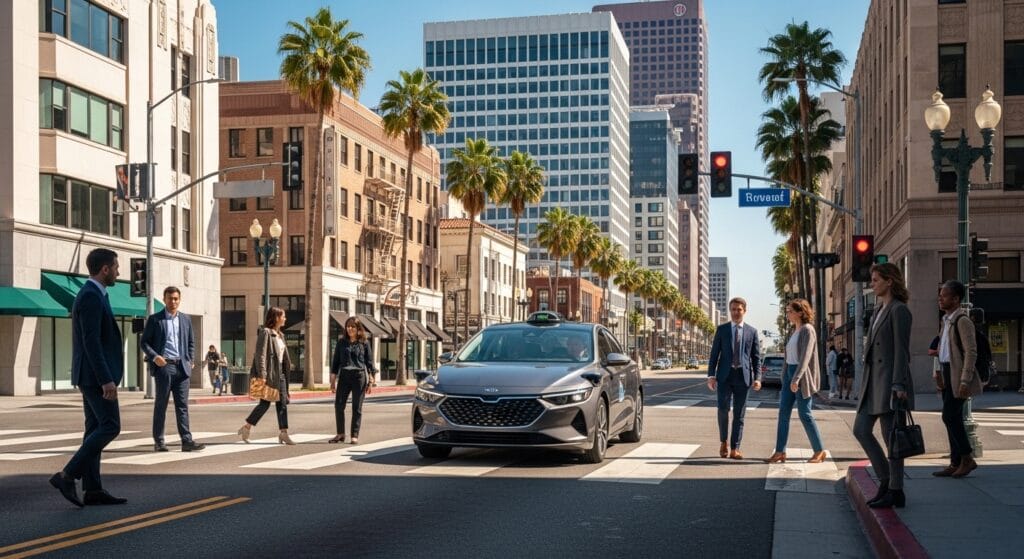
The topic is trending because this technology is already operating in the city. Los Angeles residents and visitors can take autonomous rides today, which means these crashes are no longer theoretical. They are practical injury cases with real victims, real insurers, and real evidence disputes.
More public use means more real-world accident questions
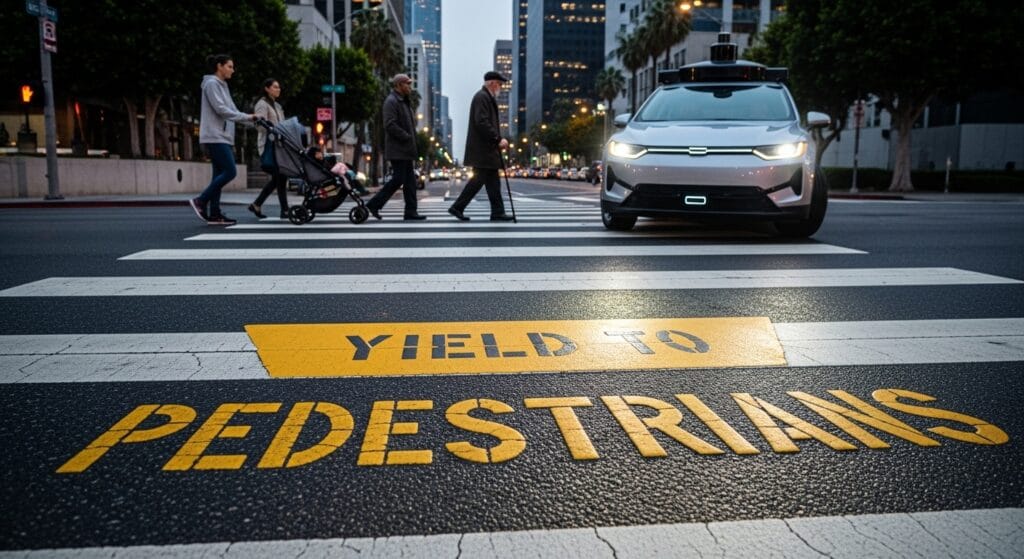
Once autonomous rides move into daily use, the legal issues become more urgent. A rider may get hurt inside the vehicle during a sudden stop. A pedestrian may claim the robotaxi failed to yield. Another driver may say the autonomous vehicle behaved in an unexpected way at an intersection. Each of those fact patterns can turn into a personal injury claim.
This article also fits your existing content cluster well. It can internally support your current post on Robotaxi Accident Claims in Los Angeles in 2026: Who May Be Liable and What Evidence Matters, while giving readers a more focused piece centered on pedestrians and riders. It also pairs naturally with your articles on California SB 371 rideshare insurance changes and pedestrian accidents in Los Angeles.
Official crash reporting keeps the issue in public view
Autonomous vehicle safety stays in the spotlight because regulators continue to track collision events. California DMV publishes autonomous vehicle collision reports, and federal regulators also require certain crash reporting involving automated driving systems. That means injury lawyers, insurers, and the public now view autonomous vehicle incidents through a stronger evidence and reporting lens than before.
For readers, that matters in a simple way. The stronger the reporting environment, the more likely it is that data, logs, and regulatory records will become part of the legal story after a crash. A robotaxi injury case may involve more digital evidence than a standard traffic collision.
Liability is not always as simple as blaming one driver
In a normal crash, fault often centers on driver negligence. In a robotaxi case, the facts can point in several directions. One claim may involve the autonomous vehicle company, a safety operator, another motorist, a maintenance provider, or even a public agency if road design played a role.
Several parties may share responsibility
A pedestrian struck by a robotaxi may claim the vehicle failed to detect them in time. A rider inside the vehicle may claim the system braked too hard or chose an unsafe path. Another driver may argue the robotaxi stopped in an unexpected place. On the other side, the company may argue that a human driver cut off the vehicle, ran a light, or created an emergency the system could not avoid.
California comparative negligence still matters here. If more than one party contributed to the crash, each side may carry part of the blame. That is why internal content like Understanding Comparative Negligence in California Personal Injury Cases fits well in this article. The presence of autonomous technology does not erase ordinary fault arguments. It often adds more of them.
What evidence and compensation issues matter most after a robotaxi crash
What injured riders and pedestrians should do right away
After a robotaxi collision, medical care should come first. Even a crash that looks minor can cause delayed symptoms. Neck pain, back pain, head trauma, and soft tissue injuries may get worse over the next day or two. Fast treatment protects both health and the claim.
Next, preserve evidence. Take photos of the vehicle, the location, your visible injuries, traffic signals, lane markings, nearby cameras, and anything unusual about the scene. If you were a rider, save the trip receipt, app screenshots, pickup and drop-off details, and any in-app messages. If you were a pedestrian or another driver, get witness names and look for nearby businesses or homes with video cameras.
Digital records can matter as much as scene photos
Robotaxi cases often involve evidence that most people do not think about right away. That may include ride history, precise trip timing, route data, event logs, camera footage, app records, and internal system information. An injured person usually cannot collect all of that alone, but they can act fast enough to help preserve it.
That is one reason these claims can become more technical than ordinary car accident cases. In a standard crash, photos and witness statements may carry much of the case. In a robotaxi claim, the fight may also involve what the sensors saw, when the system reacted, and whether the company stored key data from the trip.
Social media mistakes can still hurt a good case
Technology-heavy cases still suffer from basic mistakes. One of the biggest is posting too much online after the crash. A short comment, photo, or joke can give the defense new material to use against you. That problem does not disappear just because the vehicle drove itself. Your internal post on The Impact of Social Media on Your Personal Injury Claim is a strong supporting link here.
Compensation in Los Angeles robotaxi accident claims may include emergency care, hospital bills, follow-up treatment, rehabilitation, lost wages, future loss of earning ability, pain and suffering, and other out-of-pocket costs tied to recovery. If the injuries are serious, future care and long-term limitations may become major parts of the case value.
Readers who want official background can review the California DMV autonomous vehicle collision reports, the NHTSA Standing General Order on crash reporting, and the Waymo Los Angeles ride service page.
The big takeaway is simple. Robotaxi crashes in Los Angeles are no longer a niche issue. They now sit at the intersection of traffic law, digital evidence, and personal injury damages. Anyone hurt in one of these collisions should move fast, document carefully, and treat the case like a modern evidence dispute from the start. That approach gives victims a better chance to protect both liability arguments and compensation.