
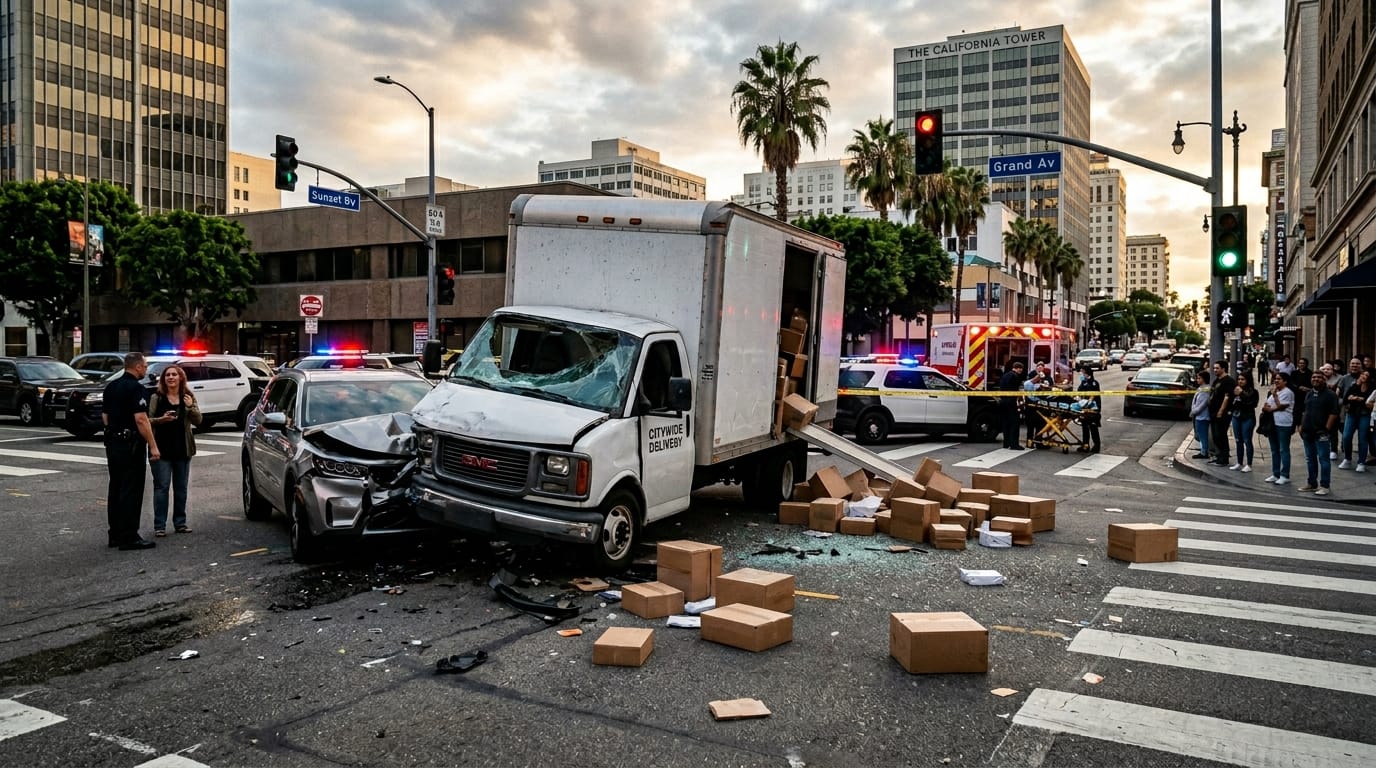
Delivery truck accident claims are becoming more important in Los Angeles because delivery traffic is everywhere. Packages, food orders, grocery deliveries, same-day shipping, courier vans, box trucks, cargo vans, and gig delivery drivers all share crowded streets with pedestrians, cyclists, e-bike riders, scooter riders, buses, rideshare vehicles, and regular commuters. When a delivery vehicle causes a crash, the legal question is not always simple: Was the driver personally responsible, or can a company also be held liable?
In Los Angeles, delivery crashes can happen in apartment zones, business districts, school areas, alleys, parking lots, freeway ramps, loading zones, and residential neighborhoods. A driver may be rushing to complete a route, checking an app, searching for an address, double-parking, backing up, opening a cargo door, or making a sudden stop. Any of these actions can create serious injury risks.
This article explains how delivery truck accident claims work in 2026, what evidence victims should preserve, who may be responsible, and how insurance disputes can affect compensation. It also connects with related site resources, including distracted driving accidents in Los Angeles, hit-and-run accident claims, and how to navigate a personal injury claim in Los Angeles.
Why Delivery Truck Accident Claims Are Different from Regular Car Accidents
A regular car accident usually involves two private drivers and two insurance policies. Delivery truck crashes can involve more parties. The driver may be an employee, independent contractor, app-based worker, subcontractor, leased driver, or third-party logistics worker. The vehicle may be owned by the driver, a company, a fleet operator, a rental provider, or a contractor. The delivery route may be controlled by an app, dispatcher, corporate system, or local warehouse.
That matters because the injured person may need to identify every possible source of coverage. In some cases, the driver’s personal auto policy may deny coverage if the driver was using the vehicle for commercial delivery. A company insurer may argue that the driver was not an employee. A contractor may blame another company. A fleet owner may point to the driver. This is why delivery truck accident claims often require deeper investigation than a basic collision.
Who can be responsible after a delivery truck crash?
Potentially responsible parties may include the delivery driver, the delivery company, a third-party logistics contractor, the vehicle owner, a maintenance provider, a loading company, or another negligent driver. If the crash involved poor vehicle maintenance, brake failure, bald tires, broken lights, overloaded cargo, or unsafe loading, the investigation should go beyond the person behind the wheel.
For example, if a delivery van hits a pedestrian while reversing, the driver’s conduct matters. But the case may also look at whether the company trained the driver, whether the route created unsafe pressure, whether the vehicle had working backup cameras, and whether the driver had enough time to complete deliveries safely. If a box truck rear-ends a car, evidence may include speed, following distance, distraction, braking, cargo weight, and delivery deadlines.
Company employee versus independent contractor
One of the biggest disputes in delivery crash cases is whether the driver was an employee or an independent contractor. Companies may try to avoid responsibility by arguing that the driver was not directly employed by them. But labels do not always end the analysis. The level of company control, route assignment, branding, schedules, delivery requirements, app instructions, training, and vehicle ownership may all matter.
Commercial insurance and personal insurance disputes
Insurance can become the real fight. A personal auto policy may exclude commercial activity. A company policy may only apply during certain parts of the delivery process. A gig delivery policy may have different coverage depending on whether the driver was waiting for an order, actively picking up, or completing delivery. Victims should not assume one insurance card tells the whole story.
Common causes of delivery truck crashes in Los Angeles
Delivery truck crashes often happen because of rushing, distraction, unsafe parking, fatigue, poor visibility, unsafe lane changes, illegal U-turns, backing collisions, failure to yield, and tailgating. Los Angeles makes these risks worse because delivery drivers must navigate dense traffic, narrow streets, apartment complexes, limited loading zones, bike lanes, pedestrians, and constant app notifications.
Distraction is especially common. A delivery driver may be using GPS, scanning package information, checking delivery instructions, responding to dispatch, or looking for a building number. If that distraction causes a crash, the claim may overlap with the issues discussed in distracted driving accidents in Los Angeles.
Fatigue, route pressure, and following distance
Delivery work can involve long hours, traffic stress, deadlines, and repetitive stops. Fatigue and pressure do not excuse unsafe driving. Commercial drivers and delivery operators must still keep a safe distance, watch the road, obey traffic laws, and adjust to conditions. The Federal Motor Carrier Safety Administration publishes rules and guidance on commercial driving, including hours-of-service limits and safety practices. Readers can review the FMCSA Hours of Service summary for official background on driving-time rules.
How to Build a Strong Delivery Truck Accident Claim in Los Angeles
The first step after a delivery truck crash is medical care. Even if the collision seems manageable, injuries can worsen after the adrenaline fades. Neck pain, back pain, headaches, shoulder injuries, knee trauma, wrist injuries, nerve symptoms, and concussions should be evaluated quickly. Medical records help connect the crash to the injury and reduce the chance that an insurance company will argue the condition came from something else.
Next, preserve evidence. Delivery vehicles may have route data, GPS logs, app records, dashcams, delivery scans, warehouse records, driver schedules, maintenance logs, and company communications. Some of this evidence may disappear quickly if no one asks for it. That is why delivery truck accident claims should be documented early and aggressively.
Evidence victims should collect right away
Take photos and videos of the delivery vehicle, license plate, company markings if visible, cargo area, damage, road layout, traffic signals, crosswalks, bike lanes, skid marks, debris, weather, lighting, and nearby cameras. If packages or delivery equipment are visible, document them without touching anything. Get the driver’s name, insurance information, employer or delivery platform information, and vehicle owner details if available.
If there are witnesses, ask for names and contact information. Nearby businesses, apartment buildings, buses, rideshare vehicles, and homes may have cameras. The sooner you identify possible footage, the better. If the delivery truck leaves the scene, the case may also involve hit-and-run issues. For that scenario, review hit-and-run accident claims in Los Angeles in 2026.
Photos, app data, vehicle records, and witness statements
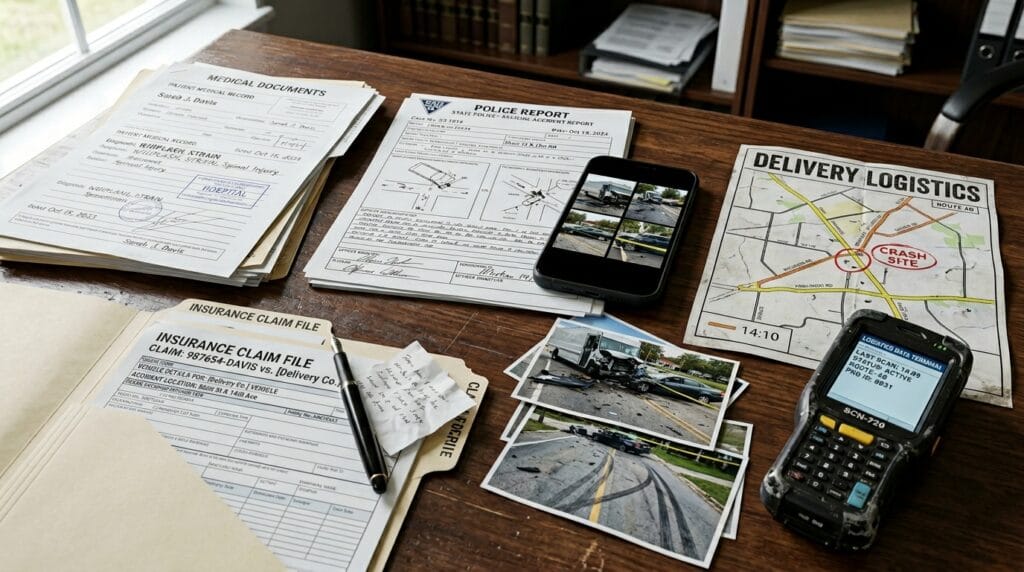
The strongest evidence package may include police reports, medical records, photos, witness statements, surveillance footage, dashcam video, delivery app records, GPS logs, vehicle maintenance records, driver schedules, dispatch messages, and insurance letters. If the vehicle was a larger commercial truck, stopping distance, load weight, braking, inspection records, and driver qualifications may become important.
Victims should also keep their own records. Save medical bills, prescriptions, therapy notes, repair estimates, rental car receipts, wage loss documents, and pain journals. These details help prove damages. For more guidance on claim value, readers can visit how to maximize personal injury compensation in Los Angeles.
Compensation and insurance issues after a delivery crash
Compensation may include emergency care, hospital bills, follow-up treatment, physical therapy, medication, future medical needs, lost wages, reduced earning capacity, pain and suffering, property damage, transportation costs, and other out-of-pocket losses. In serious cases, the claim may involve long-term disability, surgery, permanent pain, or loss of normal activities.
The insurance company may still try to reduce the claim. Common arguments include blaming the injured person, disputing medical treatment, claiming the driver was not working, arguing that another company is responsible, or offering a quick settlement before the full injury picture is clear. Before giving a recorded statement or accepting an early offer, readers should review dealing with insurance companies after an accident.
Pedestrians, cyclists, e-bike riders, and scooter users face higher risk
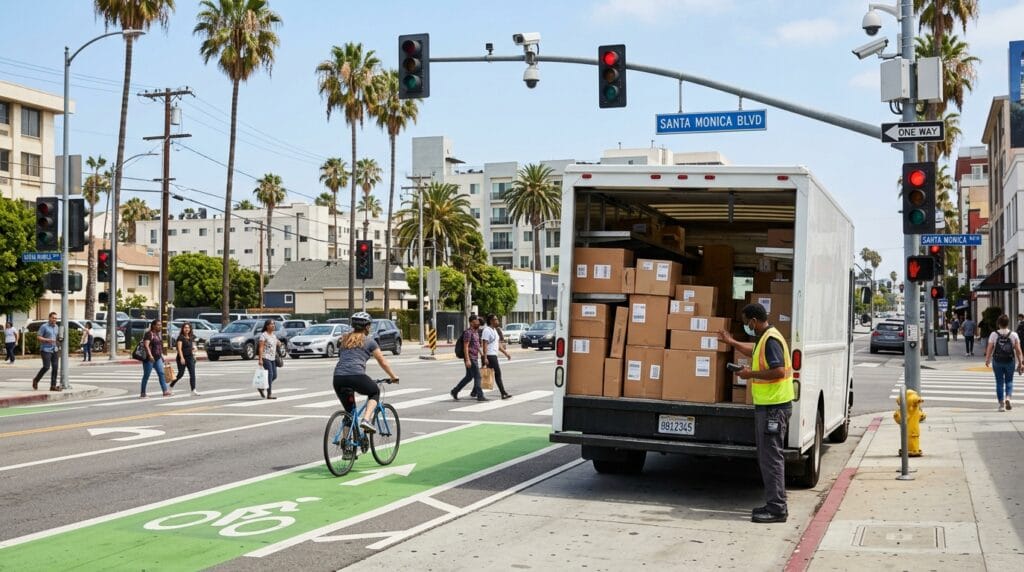
Delivery vehicles are especially dangerous for vulnerable road users. A pedestrian in a crosswalk, cyclist in a bike lane, scooter rider near a curb, or e-bike rider beside traffic has little protection against a van or truck. These cases may involve broken bones, head injuries, spinal injuries, knee damage, shoulder trauma, facial injuries, and long recovery periods. If an e-bike is involved, the site’s article on California 2026 e-bike laws and Los Angeles injury claims can support additional internal linking.
In conclusion, delivery truck accident claims in Los Angeles require more than a simple exchange of insurance information. Victims need to identify the driver, company, contractor, vehicle owner, insurance coverage, route data, camera footage, and medical damages. The case may involve commercial policies, gig delivery platforms, contractor disputes, and evidence that disappears quickly. The safest move is to document everything, get medical care, avoid quick insurance traps, and build the claim before the other side controls the story.
Disclaimer: This article is for general educational purposes only and does not provide legal advice. Every case depends on its facts, injuries, insurance coverage, available evidence, and applicable deadlines.