
Readers researching Los Angeles public sidewalk trip and fall need practical distinctions, reliable sources and a clear next step. The answer often depends on the circumstances, what can be verified and which professional or official instructions apply. This premises liability & legal updates guide focuses on the decision points people can actually investigate, rather than promising a universal result.
It is easy to focus on an insurer’s first answer or a single legal term, but the useful questions are more specific: what happened, which rules apply, what evidence survives, and what deadlines are approaching? This guide explains the practical distinctions without claiming that the result of any individual case is predetermined.
When a sidewalk fall may involve a public agency
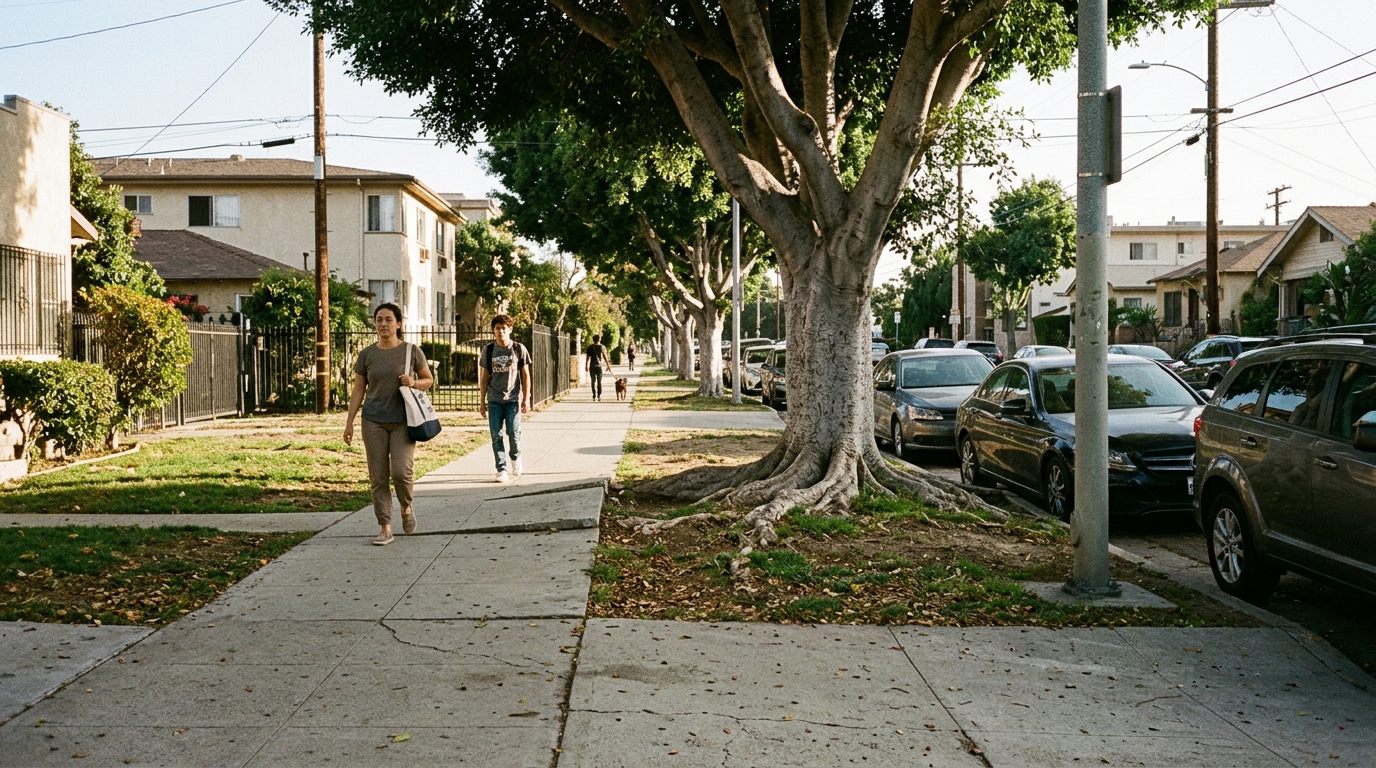
A Los Angeles public sidewalk trip and fall can involve a raised slab, damaged utility cover, construction transition or other walking-surface condition. But the presence of a defect does not by itself establish liability. The person considering a claim must identify who controlled the area, what duty may apply, whether the condition was dangerous, and how the event caused a documented injury. An accurate timeline matters more than a dramatic description. Record what was known on the day, what became clear later, and who supplied each piece of information. An insurance position or police summary is not automatically the final legal finding. Keep originals, preserve uncertainty, and do not guess at missing details. For further context, review LA personal injury attorney archives.
The exact location matters because the City of Los Angeles, another agency, a utility contractor or a private property owner may have different responsibilities. A sidewalk near a business is not automatically maintained solely by that business. Preserve street address, cross streets, photographs of adjoining signs and any public-project markings before the condition changes. Before relying on any general rule, check which jurisdiction, deadline, coverage agreement, and type of claim actually applies. A useful article should separate a possible legal theory from proof that its elements are satisfied. A legal professional can review whether exceptions or procedural prerequisites change the analysis.
Identify ownership and maintenance responsibility
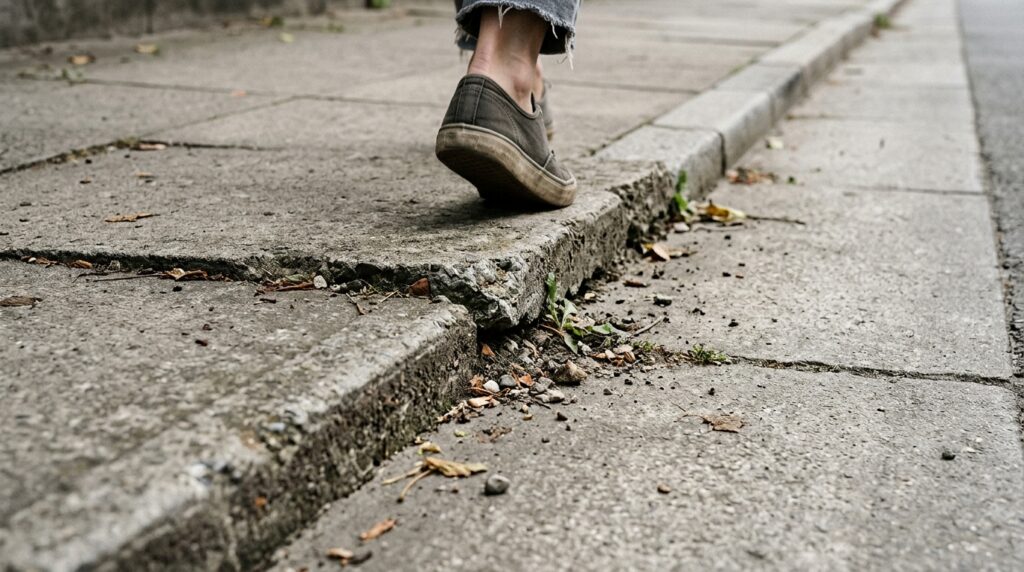
Photographs should show the overall route and a safe close-up of the suspected trip point. Do not enter traffic, block accessibility routes or return alone at night to stage a reenactment. A photograph with a ruler placed safely can show scale, but it cannot independently prove when the defect first appeared or who knew about it. Build a folder containing dated photographs, correspondence, relevant policy pages, receipts, and a simple index. Save originals separately from annotated copies. A consistent record can help an independent reviewer understand the event without assuming that one screenshot or one witness statement tells the entire story.
City sidewalks and private approaches differ
California public-entity cases often require a formal government claim before a lawsuit. The California Courts Self-Help Guide identifies a general six-month claim deadline for personal injury, with exceptions and additional requirements. A simple 311 report or insurance complaint may not satisfy the correct legal process. Anyone considering a claim should seek prompt case-specific advice. Consider what an opposing explanation would look like. Were there multiple contributing causes, conditions that changed over time, or documents pointing in different directions? Testing a claim against those alternatives produces a more reliable picture than choosing the first explanation that feels intuitively correct.
A photograph alone does not show prior notice
Proof of an agency’s notice, applicable statutory defenses and the condition’s relationship to the fall can be contested. Repair records, prior complaints and inspection history may matter. Do not confuse evidence of a later repair with automatic proof of negligence at the time of the accident. Each source has to be interpreted under the governing law. Avoid sharing sensitive records publicly or submitting unnecessary personal identifiers through unverified forms. Contact organizations through verified channels, document what was requested, and preserve confirmation numbers. Online resources can explain a process, but only a qualified professional who reviews your facts can advise on a particular case.
California’s six-month period is a general government-claim presentation deadline for personal injury, not a universal statute of limitations for every private lawsuit. Different types of claims have different rules. Confusing those deadlines can cause serious problems even when the underlying injury evidence is strong.
Measure the hazard without taking risks
For an injured person, appropriate medical evaluation comes first. Save visit notes and diagnostic findings, and describe how symptoms developed without trying to connect every preexisting condition to the fall. Severe head injury signs, inability to bear weight or concerning neurological symptoms deserve urgent attention. Follow professional care instructions. A single day rarely captures the whole consequence of an accident. Treatment may evolve, repairs may reveal hidden damage, and an employer may need updated work restrictions. Maintain dated records without exaggeration, and do not sign a broad release until the financial and legal implications are understood.
A later inspection may find that a hazard has been repaired. That change can make early photographs valuable, but the legal significance of subsequent work is not automatic. Counsel should assess the admissibility and relevance of agency records under the applicable evidentiary rules.
How to protect a possible claim and your health
A practical file includes shoes worn, weather, lighting, direction of travel, visible obstructions, witnesses, injury photographs and relevant work or transportation costs. Record observations while they remain fresh. Separate what you personally saw from what someone told you later; this distinction is especially important if another person identified the alleged defect after the fall. When there are conflicting statements, compare their timing and sources rather than labeling one person dishonest. Identify photographs, recordings, electronic records, and independent observations that may resolve the difference. Evidence is strongest when it is preserved lawfully and can be traced to its original source.
Track the government claim deadline

Contact the appropriate agency to verify the claim form and method of presentation. Keep submission confirmation, delivery dates and copies of every attachment. Rejection and lawsuit timelines can create additional deadlines, so do not use one six-month reminder as the entire legal calendar. An attorney can check who must receive notice and by what method. Write a short list of questions before speaking with a claims handler, agency, or lawyer. Ask which documents are missing, what response deadlines apply, and how decisions will be communicated. Keep a record of the answer and request important explanations in writing when practical.
Document medical treatment and lost work
Imagine someone trips where a tree root has raised a concrete slab near a bus stop. The nearby tree, bus stop and shop sign may each suggest different responsible parties, but none conclusively identifies control. Agency records, maps, maintenance facts and the accident circumstances are needed before deciding whom to approach. No article can promise a settlement amount or outcome. Legal standards, evidence, insurance contracts, and individual circumstances control the analysis. Use the guidance here as a preparation checklist, and seek case-specific advice before deadlines expire or a final agreement is signed.
Check the six-month claim requirement promptly
Avoid describing every sidewalk crack as a substantial dangerous condition. Courts evaluate the physical defect and surrounding circumstances, and statutory immunities or defenses may apply. A precise account of lighting, path, footwear and visibility is more credible than an inflated statement of risk.
A careful public-sidewalk claim begins with facts rather than assumptions about who should pay. The record should establish where the injury occurred, what the surface looked like and what evidence exists of prior knowledge or maintenance. An early qualified review helps avoid naming the wrong entity or missing a procedural requirement.
Quick reader check: Is the decision based on the correct jurisdiction? Are source documents preserved? Is an important assumption being presented as certain? Which deadlines are confirmed, and which still need verification? These four questions can identify avoidable gaps before an insurer, agency or attorney makes a consequential decision.
For authoritative context, consult California Courts government claim deadlines. Its scope and limitations should be considered alongside the specific facts; the link is not a substitute for professional or local instructions.
The best next step is a clear file and an accurate set of questions. Separate documented facts from assumptions, verify the governing deadlines and seek advice from a qualified professional when legal rights or settlement obligations are at stake. This article is general information, not individual legal advice or an offer of representation.