
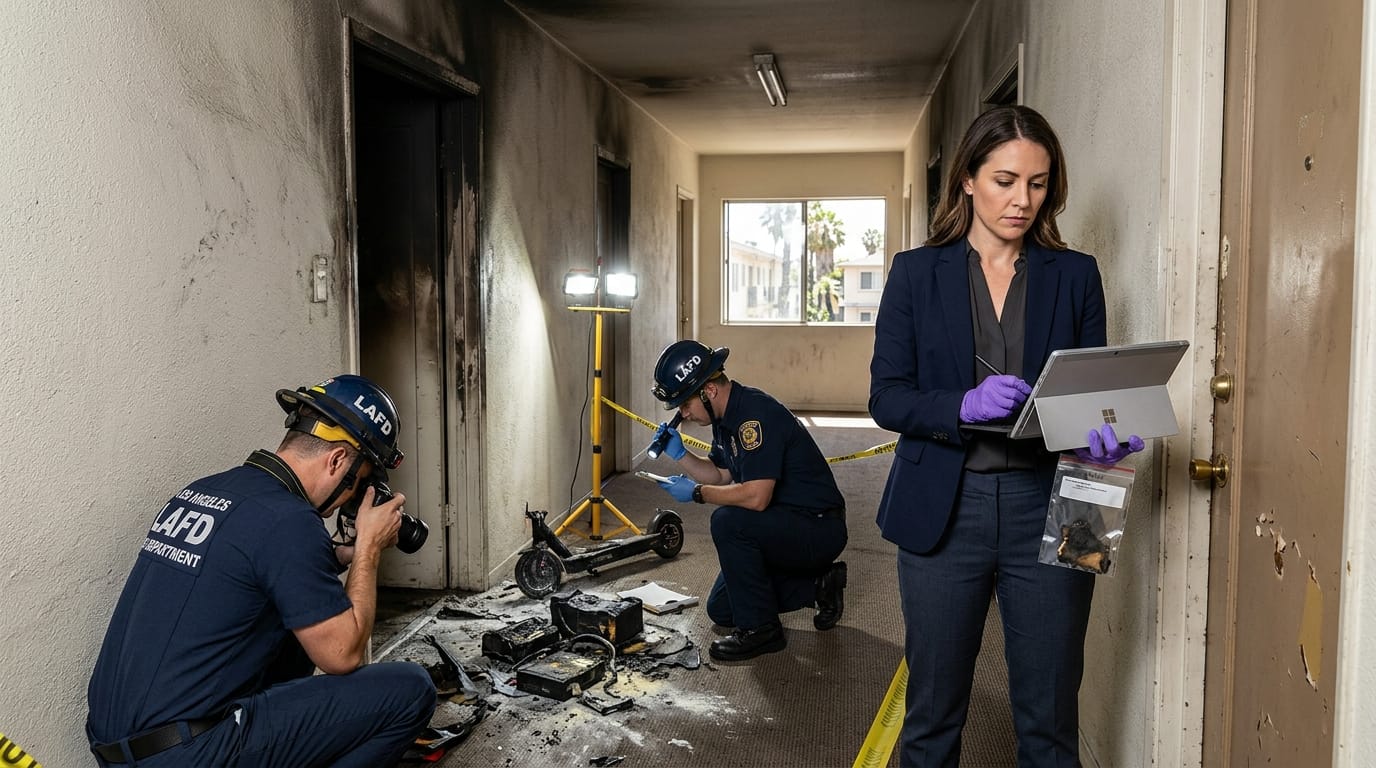
Los Angeles lithium-ion battery fire injury claims in 2026 are becoming more important as e-bikes, scooters, hoverboards, power banks, and other rechargeable devices become part of daily life. These products make transportation easier and cheaper. They also create serious risks when batteries overheat, ignite, explode, or release toxic smoke.
A battery fire can happen in an apartment, garage, hallway, storage room, rideshare vehicle, delivery vehicle, workplace, repair shop, or shared housing space. In Los Angeles, where many people live in apartments and use micromobility devices for commuting or delivery work, one defective or poorly charged battery can place several people in danger.
These cases are different from ordinary burn injury claims. A lithium-ion battery fire may involve a manufacturer, seller, repair shop, charger supplier, online marketplace, landlord, property manager, employer, delivery company, or insurance carrier. The injured person may need product evidence, fire reports, recall information, purchase records, medical records, and photos of the damaged battery.
Los Angeles lithium-ion battery fire injury claims in 2026 require fast action because evidence can disappear quickly. Fire debris may get cleaned. A damaged device may be thrown away. A landlord may repair the unit. A seller may remove product listings. If the victim waits too long, the case can become harder to prove.
Why Lithium-Ion Battery Fire Claims Are Different From Other Injury Cases
A car accident usually starts with a crash report. A slip and fall may begin with photos of a dangerous floor or broken stair. A battery fire claim often starts with a damaged product and a technical question: why did the battery fail?
Lithium-ion battery fires can involve thermal runaway, poor design, bad manufacturing, unsafe chargers, water damage, physical impact, overheating, improper repair, or lack of warnings. Once a battery ignites, flames and smoke can spread quickly. The event may also produce intense heat and toxic fumes.
For victims, the legal issue is not only that a fire happened. The stronger question is who created, sold, maintained, stored, charged, or allowed the dangerous condition that caused the injury.
E-Bikes And Scooters Can Create Serious Fire Risks
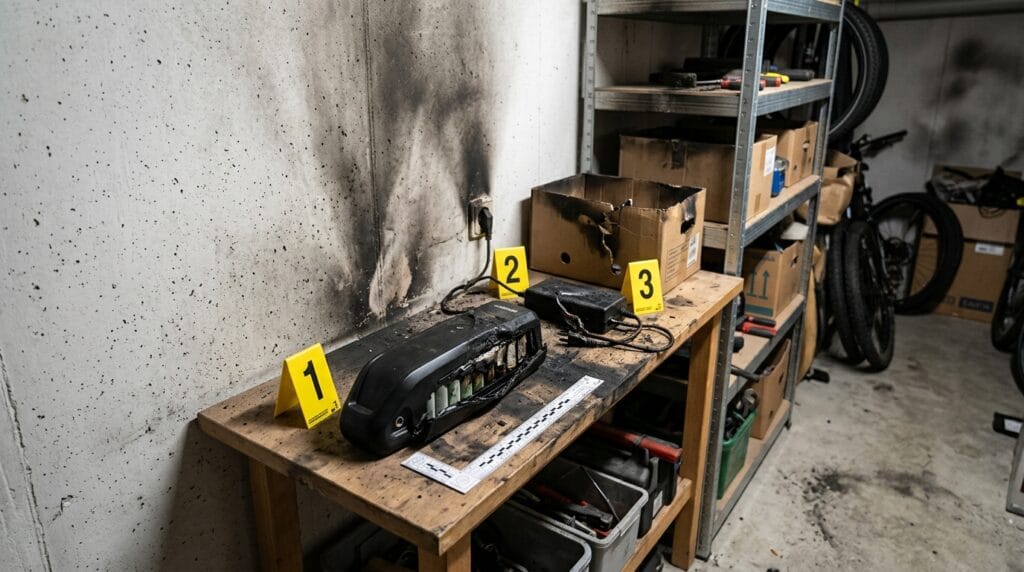
E-bikes and scooters are especially relevant in Los Angeles because many people use them for commuting, food delivery, short trips, and low-cost transportation. They often charge inside apartments, bedrooms, garages, workplaces, or hallways. That convenience can become dangerous when a battery or charger fails.
A person injured in an e-bike or scooter fire may suffer burns, smoke inhalation, eye irritation, lung injury, scarring, nerve damage, emotional trauma, or evacuation injuries. Other residents may also suffer harm if smoke fills a building or exits become blocked.
Your site already has a related article on California 2026 E-Bike Laws and What They Mean for Los Angeles Injury Claims. That internal link works well because e-bike injury claims now involve both road safety and battery safety.
Unsafe chargers and cheap replacement batteries matter
Many battery fire cases involve more than the device itself. A charger may be incompatible. A replacement battery may lack proper certification. A repair shop may install the wrong part. A seller may provide unclear instructions. A consumer may not realize that mixing chargers and batteries can create danger.
Victims should save the charger, battery, product box, receipt, online order page, repair invoice, user manual, and any warning labels. These items can help identify the product chain. Do not throw away damaged parts unless fire officials require it for safety.
If the device came from an online seller, take screenshots of the listing. Include the product name, model number, seller name, advertised certifications, reviews, and purchase date. Product pages can change or disappear after an incident.
Apartment fires can create multiple claims
Battery fires in apartment buildings can raise several legal issues. A defective product may start the fire. Poor storage rules may worsen the danger. Blocked hallways, missing smoke alarms, bad exits, or delayed maintenance may increase harm.
A landlord or property manager may become relevant if building safety problems made the incident worse. For example, missing alarms, locked exits, poor electrical conditions, or blocked escape routes can change the case. The battery may start the fire, but unsafe building conditions may increase injuries.
This section can link naturally to your article on Los Angeles Wildfire Injury Claims in 2026. Both topics involve smoke exposure, evacuation injuries, insurance disputes, and proof of physical harm after a fire event.
Who May Be Liable After A Lithium-Ion Battery Fire?
Liability depends on the facts. A manufacturer may be responsible if the battery or device had a design defect. A seller may be responsible if it sold an unsafe product. A repair shop may be responsible if it installed the wrong battery or charger. A landlord may be responsible if unsafe building conditions worsened the injury.
A delivery company or employer may also matter if the device was used for work. Many delivery workers charge e-bikes and scooters at home or near work areas. If a company required or encouraged unsafe charging practices, that may become part of the investigation.
The injured person should avoid assuming there is only one responsible party. Battery fire claims often involve several entities. Each one may blame another. A careful investigation helps identify the full chain of responsibility.
Product liability may focus on design, warnings, or manufacturing
Product liability claims can focus on different problems. A design defect means the product was unsafe even when made correctly. A manufacturing defect means something went wrong during production. A warning defect means the instructions failed to explain a serious risk clearly.
In a battery fire case, the investigation may review certifications, testing, prior complaints, recall history, charger compatibility, water exposure, overheating reports, and battery management systems. Medical records and fire reports also matter because they connect the failure to the injury.
The U.S. Consumer Product Safety Commission provides micromobility safety guidance and warns consumers about charging risks, unsafe batteries, and fire hazards. Readers can review the official CPSC Micromobility Information Center for safety tips.
What Victims Should Do After A Battery Fire Injury
After a battery fire, health comes first. Burns and smoke inhalation can worsen quickly. Seek medical care for burns, breathing trouble, coughing, dizziness, chest tightness, eye irritation, headache, confusion, or any injury from escaping the fire.
Next, protect evidence if it is safe to do so. Do not touch dangerous debris. Wait for fire officials when needed. Once the scene is safe, take photos of the device, charger, battery, outlet, room, smoke damage, escape route, alarms, and injuries. Save all medical records and discharge papers.
Ask for the fire incident report. This report may identify the suspected source, location of origin, witness statements, and responding agency details. It may not prove the entire case, but it gives the investigation a starting point.
Evidence Can Make Or Break The Claim
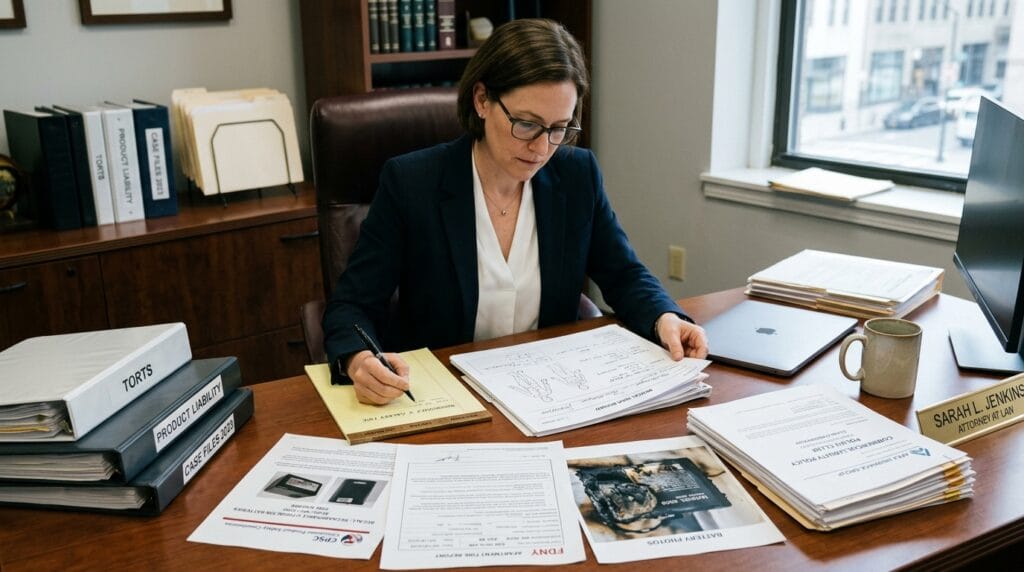
Los Angeles lithium-ion battery fire injury claims in 2026 need strong documentation. Start with product evidence. Save the device, battery, charger, purchase records, repair invoices, product manuals, packaging, and photos of serial numbers. If the product was recalled, save a copy of the recall notice.
Medical evidence is just as important. Burn injuries may require emergency care, wound treatment, surgery, skin grafts, therapy, pain management, and long-term scar care. Smoke inhalation may require respiratory treatment and follow-up. Emotional trauma may also affect daily life after a fire.
Insurance evidence matters too. Apartment renters, homeowners, landlords, product sellers, and businesses may all have different insurance policies. Do not assume the first insurer who calls represents every responsible party.
For broader claim strategy, link readers to Navigating the Personal Injury Claim Process in Los Angeles. That article helps readers understand documentation, deadlines, and general injury claim steps.
Do not let insurers minimize burn and smoke injuries
Insurance companies may try to frame the incident as a small household accident. That can be misleading. A battery fire can cause permanent scarring, nerve pain, reduced mobility, lung irritation, anxiety, sleep problems, lost income, and major property loss.
Victims should not give quick recorded statements while still shaken. Do not guess about why the battery failed. Do not say the injury is minor if treatment is still ongoing. Keep receipts for medical bills, hotel stays, damaged property, lost wages, transportation, and follow-up care.
If the fire involved an e-scooter or street device, your internal article on The Rise of E-Scooter Accidents in Los Angeles: Who’s Liable? can also support readers. It connects micromobility risk with liability analysis.
Los Angeles lithium-ion battery fire injury claims in 2026 show how modern products can create modern injury disputes. A small battery can cause a large fire. A cheap charger can lead to serious burns. An apartment hallway can become dangerous if charging devices block exits or fill the space with smoke.
The best response is fast and organized. Get medical care. Preserve the battery and charger. Take photos. Save purchase records. Request the fire report. Track medical treatment and financial losses. Then investigate every party that may have played a role.
A battery fire is not always a random accident. It may be the result of defective design, poor warnings, unsafe repairs, careless charging rules, or bad building safety practices. When someone is injured, the claim should look at the full story, not just the burned device left behind.
Note: This article is for general educational purposes only and does not provide legal advice. Every injury claim depends on the facts, evidence, insurance coverage, product history, medical records, and applicable deadlines.