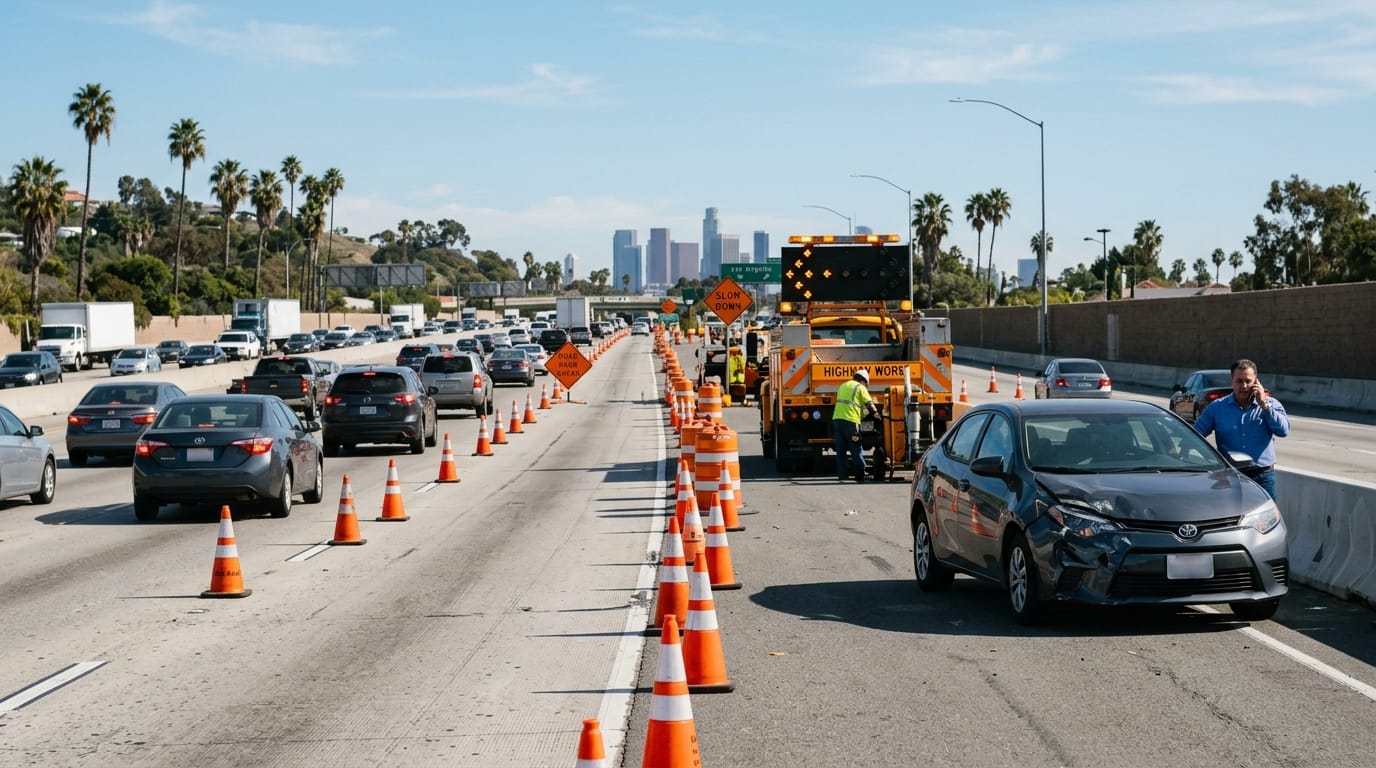
Los Angeles work zone accident claims are becoming a bigger legal topic in 2026 because road construction, traffic congestion, automated enforcement, and roadside safety laws are now overlapping more than ever. A crash near cones, barriers, lane closures, highway crews, utility trucks, or stopped vehicles can raise questions that go beyond a normal car accident claim.
In a standard crash, the main issue may be whether one driver was speeding, distracted, or failed to yield. However, a work zone crash can involve several additional facts. Was the lane closure marked clearly? Was traffic forced to merge too suddenly? Did a driver ignore hazard lights? Did a maintenance vehicle have proper warning devices? Contractor leave equipment in a dangerous place? These details can affect fault and compensation.
California’s 2026 traffic safety changes also make this topic more timely. Work zone speed safety systems, expanded move-over rules, and greater attention to roadside hazards may all become part of future accident investigations. For injured victims, the important point is simple: evidence matters. A work zone injury claim can weaken quickly if photos, witness information, dashcam footage, and road condition details are not preserved early.
This article explains how Los Angeles work zone accident claims may involve speed camera evidence, move-over law violations, contractors, public agencies, insurance disputes, and comparative fault. It is for general educational purposes only and is not legal advice.
Why Work Zone and Roadside Accident Claims Are Trending in Los Angeles
Los Angeles drivers already deal with heavy traffic, sudden lane changes, freeway congestion, rideshare stops, delivery vehicles, cyclists, pedestrians, and construction projects. When a work zone is added to that mix, the margin for error becomes smaller. A driver who is distracted for a few seconds may not notice brake lights, cones, lane shifts, stopped trucks, or workers near the shoulder.
Work zones can create several crash patterns. Rear-end collisions may happen when traffic slows suddenly. Sideswipe crashes may occur when lanes narrow or merge. Pedestrians, road workers, tow truck operators, and stranded motorists can be hit when drivers fail to move over or slow down. In some cases, debris, poor lighting, confusing signs, or missing warnings may contribute to the collision.
This topic connects naturally with the site’s existing article on Los Angeles speeding accident claims in 2026. Speed is often central in construction zone crashes because a driver may need extra time to react to reduced lanes, workers, equipment, or vehicles stopped on the shoulder.
How 2026 Safety Laws May Affect Evidence
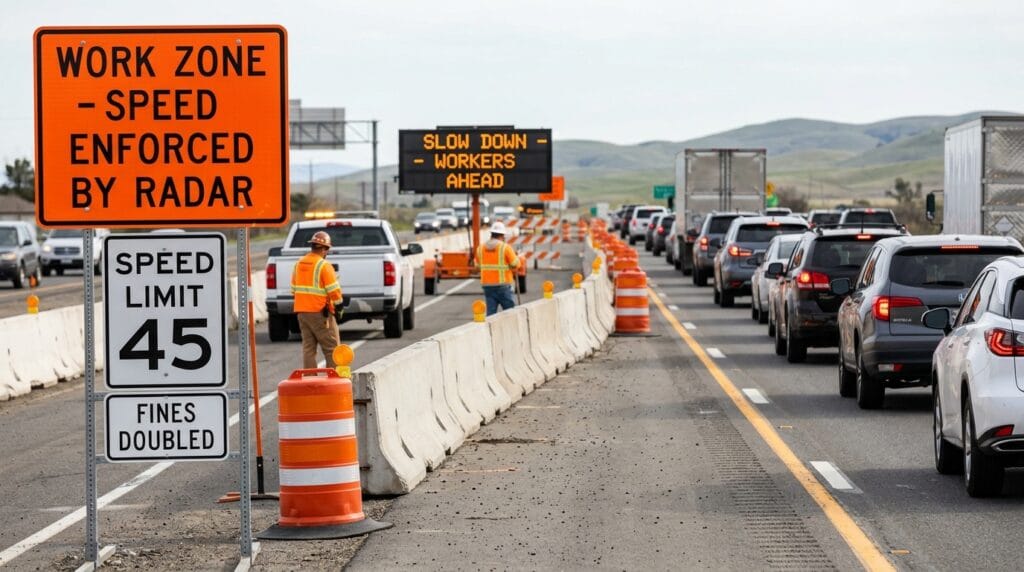
In 2026, California’s work zone speed safety pilot program may make speed enforcement more visible in certain highway construction areas. This does not mean every work zone crash will have camera footage. It also does not mean a camera citation automatically proves an injury claim. Still, the existence of work zone speed enforcement can shift the evidence conversation.
If a crash happens near a monitored work zone, victims may want to identify whether cameras, radar systems, traffic control devices, Caltrans records, dashcams, or nearby surveillance footage exist. Even if the victim cannot access every record alone, the location and timing should be documented as soon as possible. A lawyer may need to send preservation requests before video or electronic data is lost.
For official background, readers can review the California Highway Patrol’s 2026 public safety law summary. CHP explains several new safety laws, including the work zone speed safety system pilot program and the expanded move-over law.
Work Zone Camera Evidence Is Not the Same as a Civil Claim
A camera citation and a personal injury claim are not identical. A citation may support a negligence argument, but an injured person still needs proof of fault, causation, injuries, and damages. In other words, the victim must connect the unsafe driving or dangerous condition to the actual harm suffered.
Insurance companies may still argue that the crash was unavoidable, that the victim stopped too quickly, or that injuries were minor. Therefore, medical records, scene photos, witness statements, police reports, and repair estimates remain essential. Camera evidence may help, but it cannot replace a complete claim file.
The Expanded Move Over Rule May Matter After Roadside Collisions
Roadside crashes can be devastating because people outside vehicles have little protection. A stranded driver checking a tire, a tow operator loading a vehicle, or a road worker placing cones can suffer severe injuries if another driver fails to slow down or change lanes.
California’s expanded move-over rule matters because it highlights the duty to create space near stopped vehicles using hazard lights or warning devices. If a driver ignores visible hazards and hits someone near the shoulder, that behavior may support a negligence claim. Victims should document hazard lights, cones, flares, vehicle position, shoulder width, lighting, and traffic conditions.
Who May Be Liable After a Los Angeles Work Zone Crash?
Liability in Los Angeles work zone accident claims depends on the facts. A speeding or distracted driver may be the clearest at-fault party. However, work zone cases can involve more than one responsible person or entity. A contractor, government agency, trucking company, rideshare driver, delivery driver, or maintenance crew may become part of the investigation.
For example, a driver may cause the crash by speeding into a lane closure. At the same time, the work zone may have confusing signs, poor lighting, or missing warning devices. In another case, a road worker may be injured because a driver failed to move over. In a third case, a stranded motorist may be hit after a disabled vehicle stopped near construction traffic with hazards on.
Because these cases can involve multiple parties, injured victims should avoid quick assumptions. The first explanation is not always the full explanation. A crash report may identify one driver, but later evidence may reveal unsafe traffic control, poor maintenance, missing signage, or company policy problems.
Contractors, Agencies, and Drivers Can All Become Part of the Claim
Construction companies and contractors may have duties related to traffic control, equipment placement, lane closures, signage, cones, lighting, and worker safety. Public agencies may also be involved if the crash relates to road design, maintenance, or a government-managed construction project. However, claims involving public entities can have shorter deadlines and special notice rules.
Drivers may still carry primary responsibility when they speed, tailgate, drive distracted, ignore cones, cut across closed lanes, or fail to move over. If the driver flees, the claim may also involve uninsured motorist coverage or hit-and-run investigation steps. Readers can review the site’s guide on hit-and-run accident claims in Los Angeles for more background on fast evidence preservation.
How Victims Can Protect a Work Zone Injury Claim
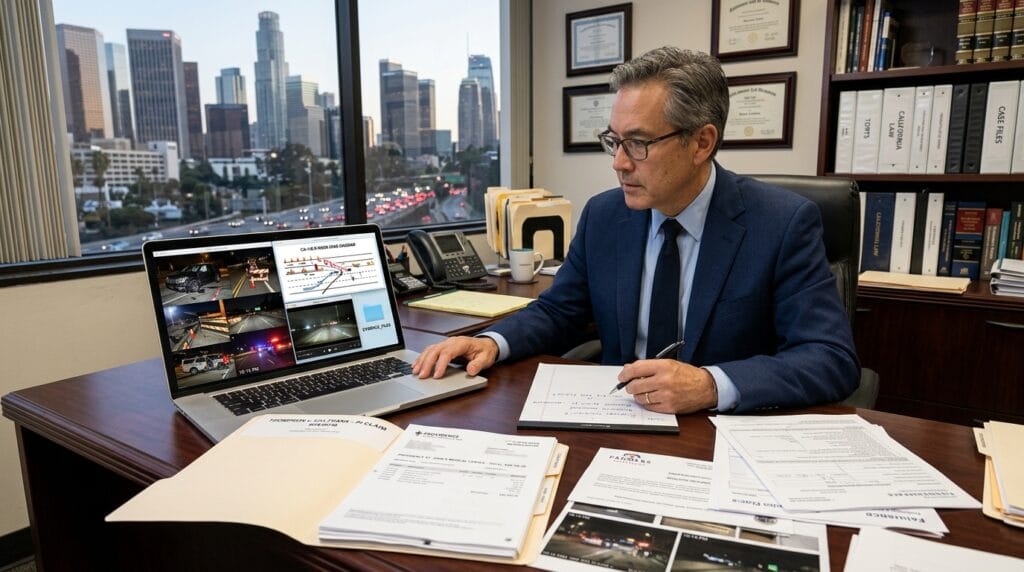
The first priority after any crash is safety. Move out of traffic if possible, call 911 when anyone is injured, and get medical care. Work zone crashes can involve high-impact forces, sudden braking, or secondary collisions, so symptoms may appear after the adrenaline fades. Neck pain, back pain, headaches, dizziness, shoulder pain, knee injuries, numbness, and anxiety should be taken seriously.
After immediate medical needs are addressed, documentation becomes critical. Take photos of vehicle damage, lane markings, cones, signs, barriers, skid marks, debris, traffic signals, lighting, hazard lights, construction equipment, and nearby cameras. If safe, capture wide-angle photos that show how traffic was directed through the area. Close-up damage photos are helpful, but they do not show the full roadway story.
Witnesses may also be important. Other drivers, workers, passengers, pedestrians, tow operators, and nearby business employees may have seen unsafe speed, sudden lane changes, missing warnings, or a driver failing to slow down. Ask for names and phone numbers before people leave.
What Evidence Should Victims Preserve?
Strong Los Angeles work zone accident claims usually rely on several types of evidence. Useful records may include police reports, medical records, ambulance records, repair estimates, photos, dashcam footage, surveillance video, witness statements, work zone layout information, traffic control plans, contractor records, and insurance communications.
Medical documentation should begin early. Delayed treatment gives insurance companies an easy argument. They may claim the injury was not caused by the crash or was not serious. Emergency care, follow-up visits, imaging, therapy notes, prescriptions, work restrictions, and pain journals can help show how the crash affected daily life.
Insurance adjusters may ask questions that sound harmless but are designed to reduce the claim. They may ask whether you saw the cones, whether you stopped suddenly, whether you were distracted, or whether you feel better. Before giving recorded statements or accepting quick offers, victims may benefit from reviewing the site’s article on dealing with insurance companies after an accident.
Deadlines and Comparative Fault Can Reduce Recovery
California follows comparative fault rules, which means an injured person’s compensation may be reduced if they are found partly responsible. In a work zone case, an insurance company may argue that the victim was speeding, changed lanes unsafely, ignored warning signs, stopped suddenly, or failed to stay alert. That does not automatically defeat the claim, but it can affect value.
This is why the site’s guide on comparative negligence in California personal injury cases is important. Fault arguments can become complicated when drivers, contractors, agencies, and road conditions all overlap.
Deadlines also matter. If a public agency may be involved, special claim notice rules may apply. Waiting too long can damage the case before negotiations even begin. A victim should act quickly, preserve evidence, organize medical records, and avoid letting the insurer control the story.
Los Angeles work zone accident claims are not ordinary fender-bender cases. They can involve speed, construction layouts, warning devices, move-over rules, public agencies, contractors, insurance disputes, and serious injuries. The strongest claims are built early with clear documentation, medical proof, witness support, and a timeline that explains exactly how the crash happened.