
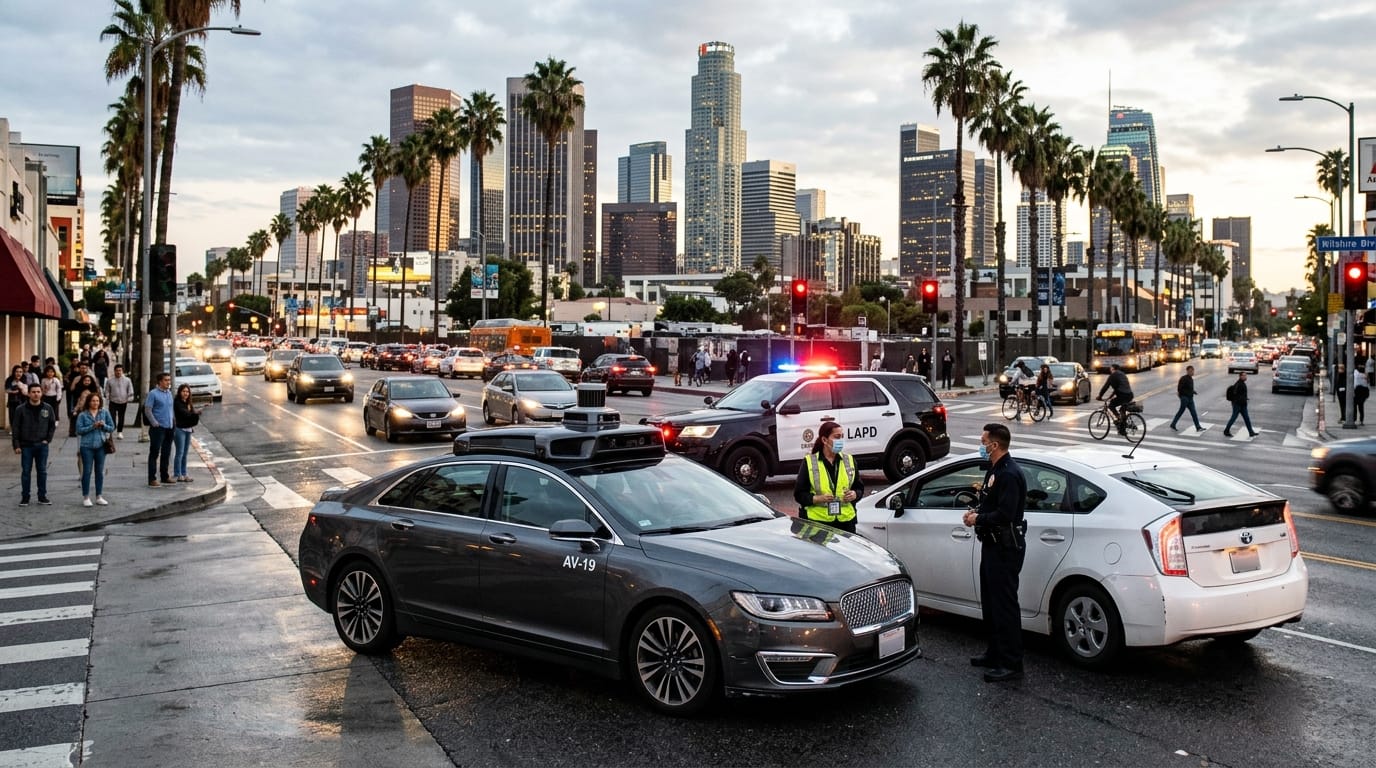
Autonomous vehicle evidence in Los Angeles injury claims is becoming a bigger issue in 2026 because crashes are no longer limited to ordinary driver mistakes. Today, a serious accident may involve a robotaxi, a delivery vehicle, a rideshare trip, a driver using advanced assistance features, or several vehicles captured by cameras and app records. As a result, the real question after a crash is no longer just who hit whom. It is also what the technology recorded before, during, and after impact.
This topic matters in Los Angeles because the city is already dealing with crowded streets, delivery traffic, rideshare pickups, pedestrians, cyclists, scooters, buses, and autonomous vehicles. Meanwhile, California is strengthening oversight of autonomous vehicle operations. As a result, crash reports, trip logs, and camera footage may play a larger role in injury claims.
For injured people, this shift can be confusing. A victim may know they were hurt, but not know which company controlled the vehicle or what data exists. This article explains why autonomous vehicle evidence in Los Angeles injury claims matters and what records may help prove fault.
Why Autonomous Vehicle Evidence Is Trending in Los Angeles
Los Angeles injury claims are becoming more technical. In the past, many car accident cases focused on the police report, vehicle damage, witness statements, and medical records. Those items still matter. However, modern crashes can also involve app data, GPS history, dashcam footage, vehicle event data, onboard cameras, automated driving logs, and corporate safety records.
Because of this, a claim may require a deeper investigation than a standard rear-end collision. For example, a pedestrian may be hit near a crosswalk by a vehicle using automated technology. A rideshare passenger may be injured during a sudden stop. A delivery truck may block a bike lane. In each situation, digital records may help explain what happened.
Your site already covers related topics, including Los Angeles robotaxi pedestrian and rider accident claims, delivery truck accident claims in Los Angeles, and California SB 371 rideshare insurance changes. This post supports that cluster by focusing on proof.
New California rules make AV accountability more visible

Autonomous vehicle regulation is getting more attention because state and federal agencies are tracking these vehicles more closely. California’s DMV has updated autonomous vehicle rules to improve oversight and enforcement. In addition, federal crash reporting requirements help regulators collect information about certain crashes involving automated driving systems and advanced driver assistance systems.
For injury victims, these rules matter because official reporting can point to useful evidence. A crash may generate company records, public reports, internal logs, or communications with regulators. However, victims should not assume that every useful record will be easy to get.
Citations and crash reports can shape early liability questions
When police, regulators, or companies create records after a crash, those records may influence the claim. They can help identify the vehicle, the operator, the time of the incident, and the location. They may also show whether the vehicle was operating in autonomous mode, under remote support, or with a human driver involved.
Still, one record rarely tells the full story. A report may confirm that a crash happened, but it may not explain all causes. Therefore, victims should also preserve photos, videos, witness names, medical records, and repair estimates.
These cases are not only about robotaxis
Robotaxis get attention because they are visible and new. However, autonomous vehicle evidence in Los Angeles injury claims can appear in many other cases. Some crashes involve cars with advanced driver assistance features. Others involve delivery fleets, rideshare vehicles, commercial vans, or vehicles with dashcams and telematics systems. As technology spreads, digital proof becomes more common.
That is why victims should avoid narrow assumptions. A crash may look like a normal car accident at first. Later, the evidence may show that app instructions, route timing, camera footage, vehicle data, or company policies played a role. In other words, the technology angle may not be obvious at the scene.
Delivery vehicles, rideshare platforms, and human drivers may still matter
Technology does not erase ordinary negligence. A human driver may still speed, run a red light, check a phone, or fail to yield. Likewise, a company may still face questions about training, maintenance, scheduling pressure, or vehicle supervision. In some cases, several parties may share fault.
For example, a crash may involve a delivery driver who double-parked, a rideshare driver who stopped suddenly, and another motorist who was distracted. If automated data or app records exist, they may help separate speculation from facts. This also connects naturally with your article on distracted driving accidents in Los Angeles.
What Evidence Victims Should Preserve After an AV-Related Crash
After any serious crash, health comes first. Call 911 when needed, seek medical care, and report symptoms clearly. After that, evidence preservation becomes important. This is especially true when autonomous technology, app-based transportation, or commercial vehicles may be involved.
Start with the basics. Take photos of the vehicles, license plates, traffic signals, lane markings, crosswalks, debris, visible injuries, and surrounding businesses. Also save screenshots, receipts, trip details, delivery records, rideshare messages, or any app notifications. If a witness saw the crash, get their name and contact information.
The first hours after the crash matter
Many useful records are time-sensitive. Security cameras may overwrite footage within days. Dashcams may record over old files. App messages may disappear. Vehicle data may be stored in a system the victim cannot access directly. Therefore, the first hours and days after the crash can affect the strength of the claim.
Victims should also be careful with insurance calls. An adjuster may ask for a recorded statement before the injured person understands the full evidence picture. A simple comment can later be used to argue that the injuries were minor or that the victim accepted blame. For this reason, it helps to review your site’s guide on hit-and-run accident claims in Los Angeles, because the same fast-evidence mindset applies.
Digital proof can disappear faster than physical damage
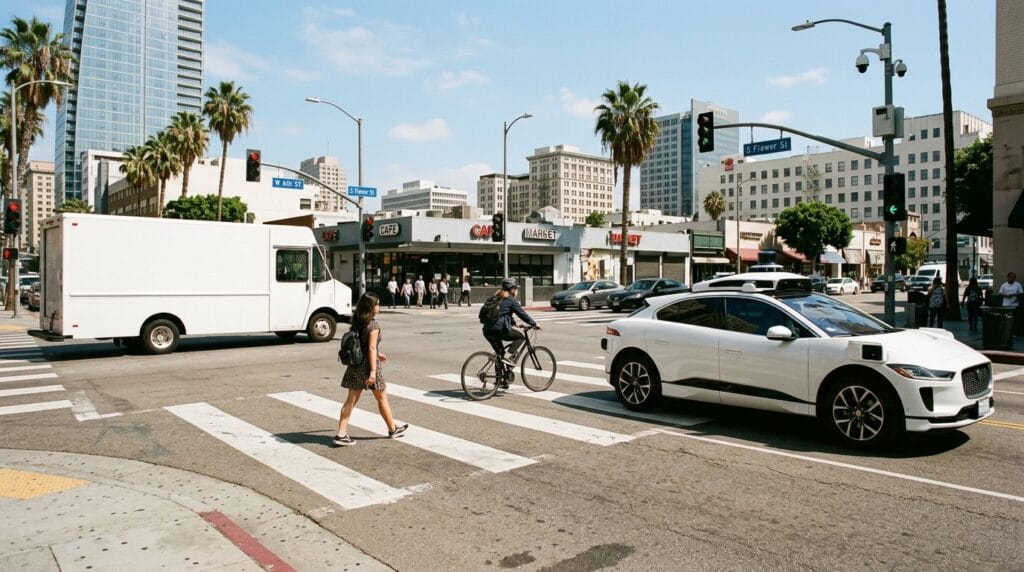
Physical damage is usually visible. Digital proof is different. It may exist on a company server, in a vehicle system, inside an app, or on a nearby camera. If no one asks for it quickly, it may be deleted, overwritten, or withheld until much later.
Useful digital evidence may include GPS data, ride receipts, speed information, braking events, camera footage, route history, system alerts, call logs, and customer support messages. In a serious case, lawyers may also look for maintenance records, software update timing, and prior incident reports.
Medical records still connect the technology story to real harm
A strong evidence file does not help much if the injury is poorly documented. Medical records connect the crash to the actual harm suffered by the victim. Emergency treatment, imaging, physical therapy, specialist visits, prescriptions, work restrictions, and follow-up care can all support damages.
Do not wait too long to get checked. Delays create room for insurers to argue that the injury came from another cause. Also, follow medical instructions. Missed appointments or unfinished treatment can reduce the value of a claim. Even in a technology-heavy case, compensation still depends on proving pain, limitations, bills, lost income, and future needs.
Victims should also avoid oversharing online. A social media post can be used out of context, even when it seems harmless. This is especially risky after a high-tech crash because insurers may compare medical records, location data, photos, and public posts. Your related article on the impact of social media on a personal injury claim is a strong internal link here.
Finally, readers should understand that autonomous vehicle evidence in Los Angeles injury claims is not only about proving a machine failed. It is about building the complete story. That story may include human choices, company policies, vehicle data, traffic design, medical proof, and insurance behavior. As Los Angeles roads become more connected and more automated, injury claims will depend more on fast action and careful documentation.
For official background, readers can review the National Highway Traffic Safety Administration’s crash reporting information for automated driving systems. It explains why crash reporting has become an important part of modern vehicle safety oversight. For victims, the takeaway is direct: document the scene, preserve digital records, seek medical care, and treat the claim like an evidence case from the very beginning.