
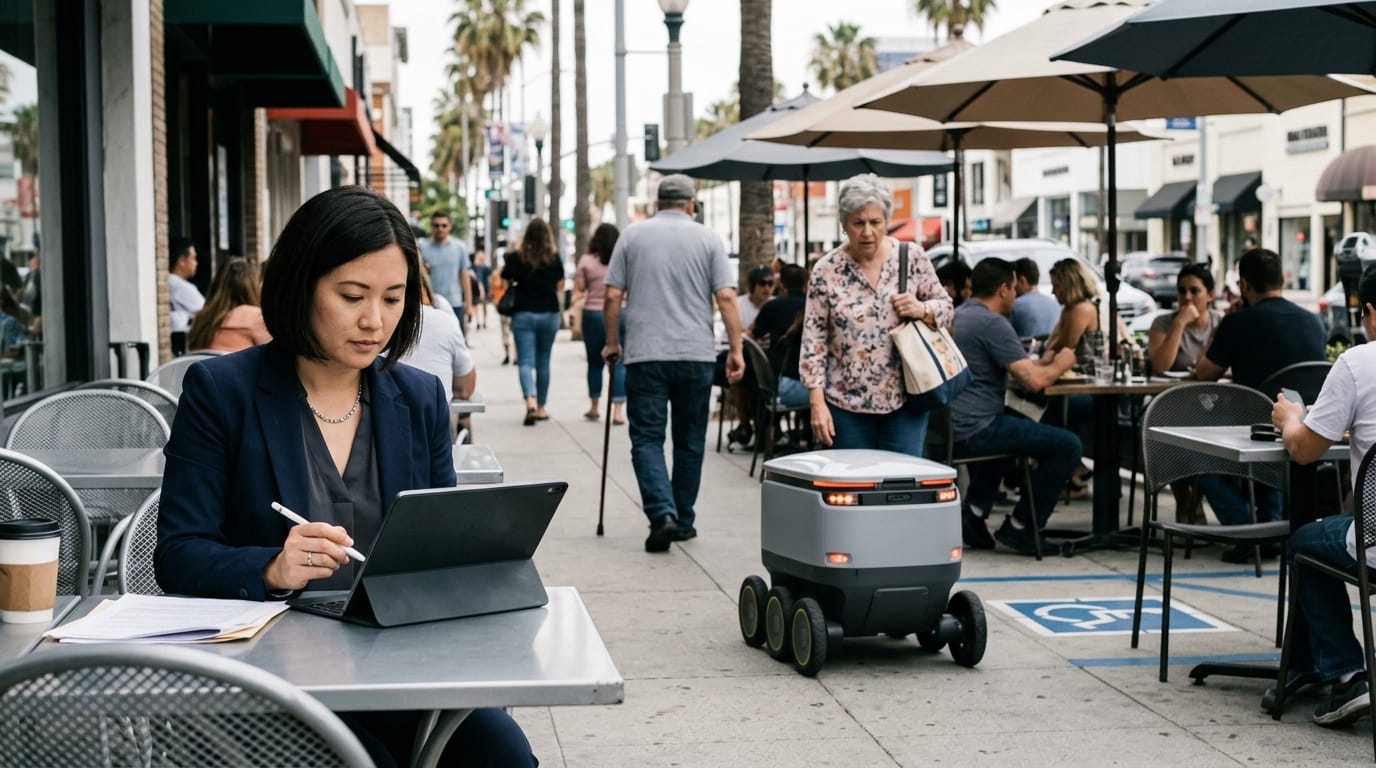
Los Angeles delivery robot accident claims in 2026 are becoming a real legal topic as sidewalk robots spread across the city. These small autonomous or remotely monitored devices deliver food, drinks, groceries, and other items through busy pedestrian areas. They may look harmless, but they can create serious problems when they block sidewalks, move unpredictably, collide with pedestrians, or interfere with people using wheelchairs, walkers, canes, or strollers.
Los Angeles already has complex traffic and pedestrian safety issues. Now another type of device shares the same sidewalk space. A delivery robot may travel near restaurants, outdoor dining areas, apartment buildings, crosswalks, transit stops, entertainment districts, and crowded commercial blocks. When something goes wrong, the injured person may not know who to call or who should pay.
These claims are different from ordinary sidewalk injury cases. A delivery robot may involve a technology company, restaurant partner, delivery platform, remote operator, maintenance contractor, software provider, or device manufacturer. It may also store video, GPS data, route history, remote-control logs, and incident reports. That evidence can matter as much as witness statements and medical records.
This guide explains how Los Angeles delivery robot accident claims in 2026 may work, what evidence victims should preserve, and why these cases should not be treated like a simple trip-and-fall claim.
Why Los Angeles Delivery Robot Accident Claims in 2026 Are Different
A normal sidewalk fall often focuses on a cracked walkway, spilled liquid, poor lighting, unsafe stairs, or negligent property maintenance. A delivery robot incident can involve moving technology. That creates new questions about programming, monitoring, maintenance, route design, speed, braking, sensors, and company supervision.
The device may be small, but the legal issues are not. A person can fall while avoiding a robot. A wheelchair user may get forced into an unsafe path. A child may be struck or startled. A pedestrian may trip over a stalled robot. A cyclist or scooter rider may swerve when the robot enters a crossing path.
Insurance companies may try to minimize these claims because the device looks less dangerous than a car or truck. Victims should not accept that framing too quickly. A fall on concrete can cause wrist fractures, knee injuries, hip injuries, head trauma, back pain, neck injuries, shoulder damage, or facial injuries.
Sidewalk Robots Create New Pedestrian Risks
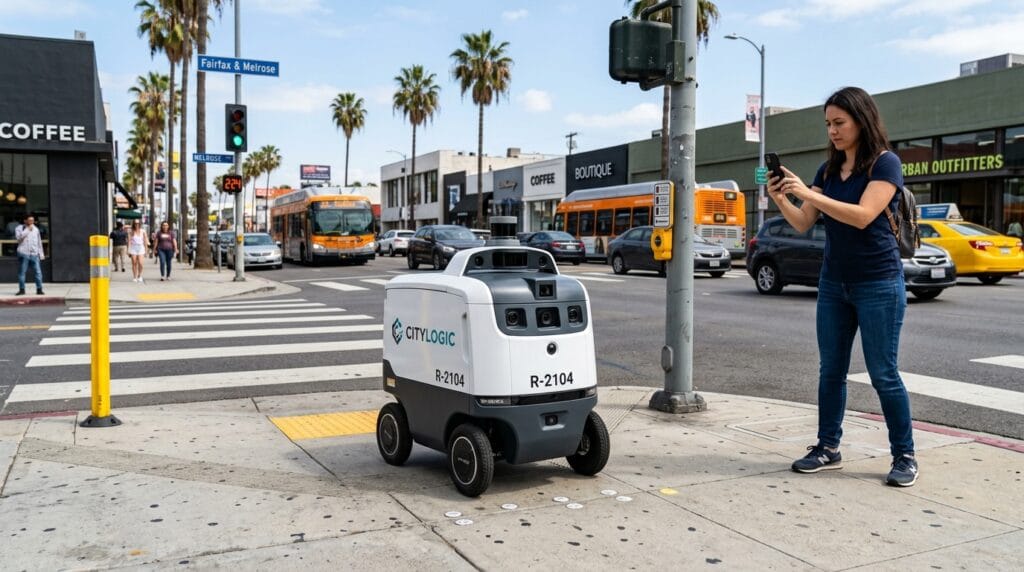
Delivery robots operate in places built for people. That is the core problem. Sidewalks already serve pedestrians, wheelchair users, delivery workers, restaurant customers, street vendors, tourists, children, pets, cyclists entering crossings, and people waiting for rideshare pickup. Adding moving machines can make the space harder to navigate.
The risk increases in crowded areas. Outdoor dining can narrow the walking path. Parked scooters can block access. Construction signs, trash bins, trees, bus stops, and uneven pavement can reduce space even more. If a robot stops, turns, or waits in the wrong place, a pedestrian may have no safe path around it.
This topic connects naturally with the site’s existing article on Los Angeles robotaxi pedestrian and rider accident claims in 2026. Both issues involve autonomous technology, digital evidence, and injury claims that do not fit the old “two human drivers” model.
Crowded sidewalks and ADA access matter
Sidewalk access is not only a convenience issue. It can become a safety and accessibility issue. People using wheelchairs, walkers, canes, mobility scooters, or service animals may have fewer options when a delivery robot blocks the clear path.
If a robot forces someone toward the curb, into traffic, into uneven pavement, or around outdoor dining structures, the incident may involve more than one careless act. The investigation may examine whether the operator chose an unsafe route, failed to respond to congestion, ignored accessibility needs, or allowed the robot to stop in a dangerous place.
Victims should take photos showing the full sidewalk layout. Wide photos matter because they show how much space existed around the robot. Close-up photos also help because they may show the device number, company name, lights, cameras, wheels, damage, or warning labels.
Robot data may become key evidence
A delivery robot may store more evidence than people realize. The device may record location, speed, route, stops, remote interventions, camera footage, obstacle detection alerts, and operational status. A company may also have delivery records, customer order details, maintenance logs, complaint history, and incident reports.
This evidence may disappear if nobody asks for it quickly. Victims should not assume the company will preserve everything voluntarily. A preservation letter can request video, GPS logs, internal reports, repair records, route data, and remote operator records before they are deleted or overwritten.
The evidence strategy is similar to the one used in technology-heavy crash cases. Your existing article on Robotaxi Accident Claims in Los Angeles in 2026 can support readers who want to understand why digital logs and company-controlled data matter.
Who May Be Liable After A Delivery Robot Injury?
Liability depends on how the incident happened. If the robot struck someone, the investigation may focus on the company operating the robot, the software, sensors, braking, speed, monitoring, and route decisions. If the robot blocked an accessible path, the claim may look at sidewalk conditions, operator rules, restaurant placement, and whether the device should have been there at that time.
Several parties may share responsibility. The robot operator may control the fleet. A delivery platform may connect restaurants and customers. A restaurant may benefit from the delivery service. A manufacturer may design the device. A maintenance contractor may inspect or repair it. A property owner may also matter if the incident happened near a private entrance or outdoor seating area.
The injured person should avoid guessing. The better approach is to identify every possible party, preserve evidence, and let the facts show who created or failed to prevent the danger.
Operator, manufacturer, or business partner?
A delivery robot case may involve negligence, premises liability, product liability, or a mix of all three. If the operator failed to monitor the robot properly, that may support a negligence claim. If a sensor or braking system failed, product liability may become relevant. If a business allowed robots to block a crowded entrance or dining area, premises issues may also appear.
Los Angeles has local rules for Personal Delivery Devices, and the Los Angeles Department of Transportation provides a page for its PDD Rules and Guidelines. Readers can review the official LADOT resource here: Personal Delivery Devices PDD Rules and Guidelines.
The key point is simple. Do not assume the robot itself is the only “cause.” A machine acts through design choices, business decisions, software rules, route planning, and human oversight. Those facts can decide whether an injured person has a valid claim.
What Victims Should Do After A Delivery Robot Incident
After any sidewalk injury, health comes first. Get medical care if you hit your head, feel dizzy, have neck pain, back pain, wrist pain, knee pain, shoulder pain, numbness, weakness, swelling, or trouble walking. Some injuries become worse after the adrenaline fades.
Next, document the scene before it changes. Delivery robots move away quickly. Outdoor furniture may shift. Witnesses may leave. Nearby cameras may overwrite footage. The sooner evidence is collected, the stronger the claim may become.
Take photos of the robot, the company logo, any visible identification number, the sidewalk, nearby businesses, crosswalks, outdoor dining areas, signs, scooters, obstacles, lighting, and your injuries. If possible, record a short video showing the location from several angles.
Evidence And Compensation Issues After A Robot Injury
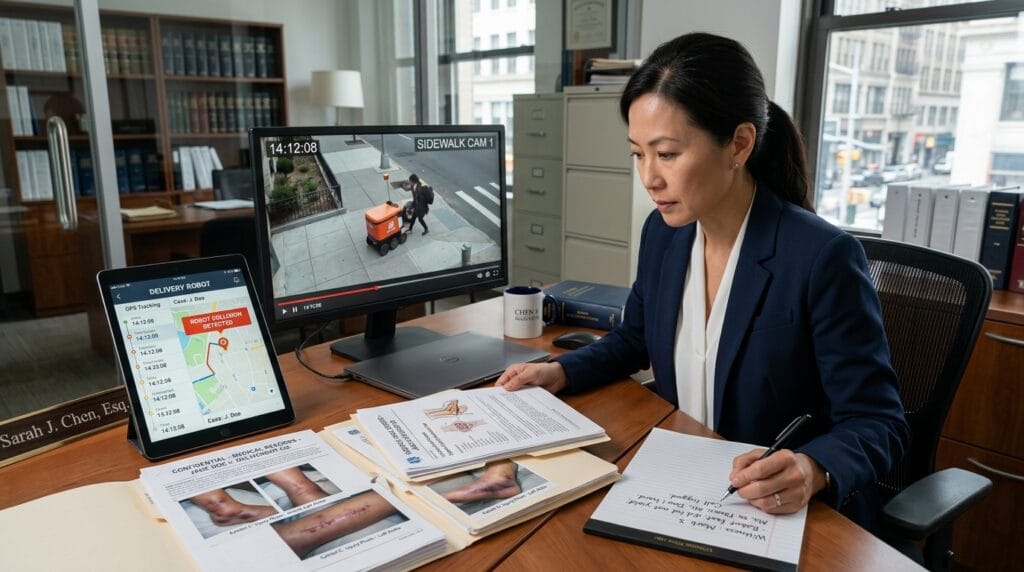
Los Angeles delivery robot accident claims in 2026 may involve both physical evidence and digital evidence. Physical evidence includes photos, medical records, damaged belongings, shoes, clothing, witness names, and accident reports. Digital evidence may include robot footage, route logs, app records, remote operator notes, and nearby surveillance video.
Medical documentation is also critical. Keep emergency room records, urgent care notes, imaging results, therapy records, prescriptions, work restrictions, and receipts. If you miss work, save pay records and employer notes. If pain affects your daily life, keep a simple symptom journal.
Compensation may include medical bills, future treatment, lost income, reduced earning ability, pain and suffering, out-of-pocket costs, and other damages tied to the injury. For general claim strategy, link readers to Navigating the Personal Injury Claim Process in Los Angeles.
Comparative negligence can still come up. A company may argue that the victim was distracted, walked too close to the device, ignored a warning, or failed to avoid it. The response should focus on facts. Was the robot blocking the path? Did it move suddenly? Was the area too narrow? Did the victim have a reasonable alternative route? Your internal guide on Understanding Comparative Negligence in California Personal Injury Cases fits this section well.
Do not treat the case like an ordinary fall
A delivery robot injury may look minor at first, but the evidence can be technical. A standard photo of the sidewalk may not be enough. The victim may need company data, robot logs, surveillance video, delivery records, maintenance details, and proof of how the device was being controlled.
Do not give quick statements that minimize the injury. Do not say you are fine if pain is developing. Do not sign broad releases before understanding who may be responsible. If the company contacts you, write down the caller’s name, company, phone number, and what they requested.
Los Angeles delivery robot accident claims in 2026 show how personal injury law must adjust to new technology. Sidewalks are changing. Delivery systems are changing. Evidence is changing too.
Victims should move quickly, document carefully, seek medical care, and preserve both physical and digital proof. A small robot can still cause a serious injury. When that happens, the claim should focus on the full chain of responsibility, not just the machine sitting on the sidewalk.
Note: This article is for general educational purposes only and does not provide legal advice. Every injury claim depends on the facts, evidence, insurance coverage, applicable law, and filing deadlines.